
Digital HACCP Systems: Moving from Paper Records to Food Safety Software
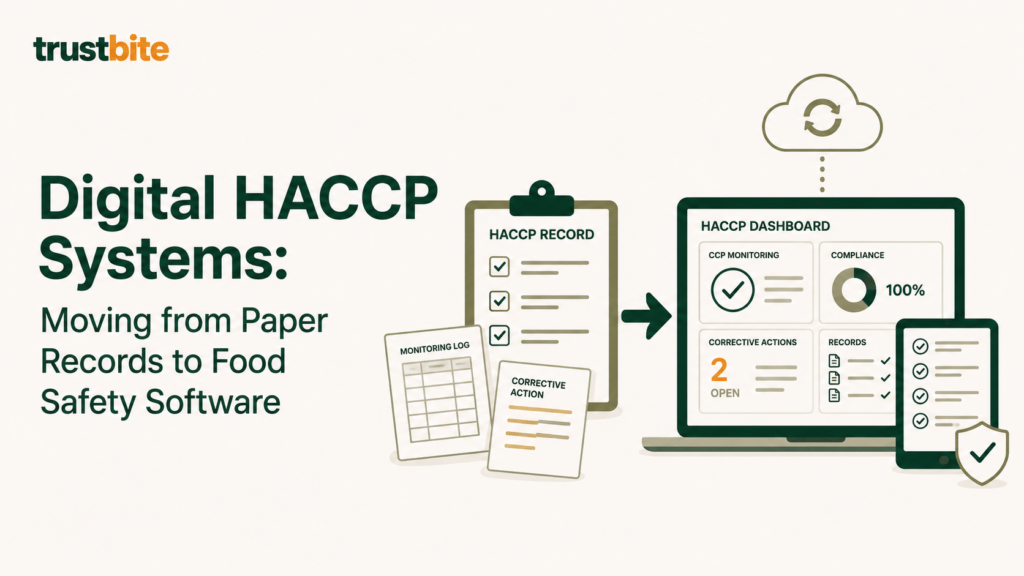
A digital HACCP system is a software-based approach to managing the documentation, monitoring, corrective action, and verification activities that a HACCP-based food safety management system requires. It replaces or supplements the paper-based records that traditional HACCP implementation has relied on, generating electronic records that are more consistent, more complete, and more immediately accessible than manual […]
TrustBite Membership: What It Includes and How It Benefits Food Safety Organizations
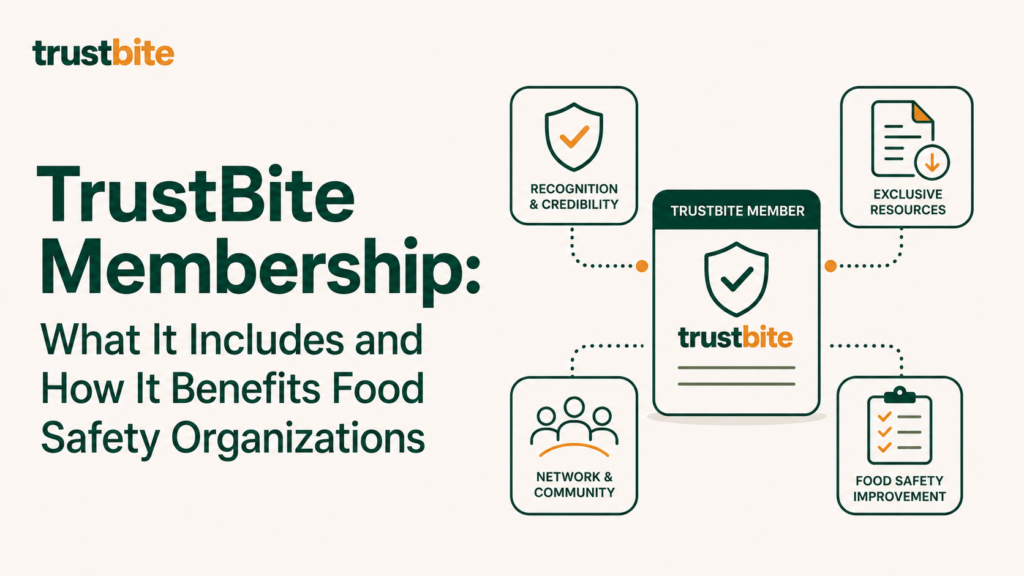
TrustBite membership is the formal relationship through which food businesses, training providers, consultants, and other food safety professionals engage with TrustBite as an organization, access its recognition framework, and participate in the broader food safety ecosystem TrustBite coordinates. TrustBite membership sits alongside but is distinct from TrustBite recognition: membership is the relationship, recognition is the […]
Food Storage Best Practices: Dry, Refrigerated, and Frozen Storage Explained
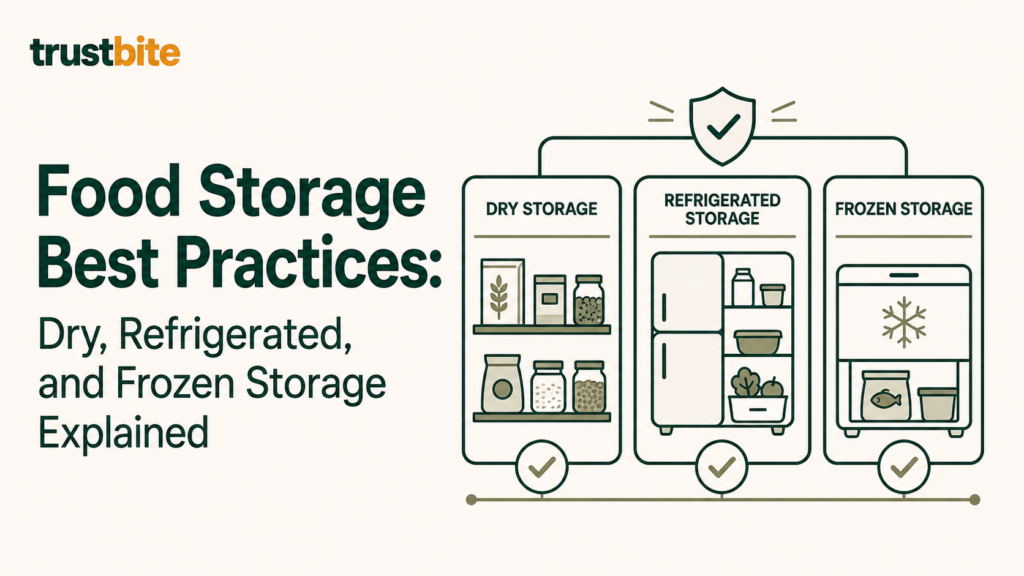
Food storage best practices are the procedures and conditions required to keep food safe from the point it enters a food business to the point it is used in preparation or service. They cover dry goods storage, refrigerated storage of perishable and chilled products, and frozen storage of products requiring sub-zero temperature maintenance. In each […]
Why Training Alone Cannot Eliminate Human Error in Food Safety
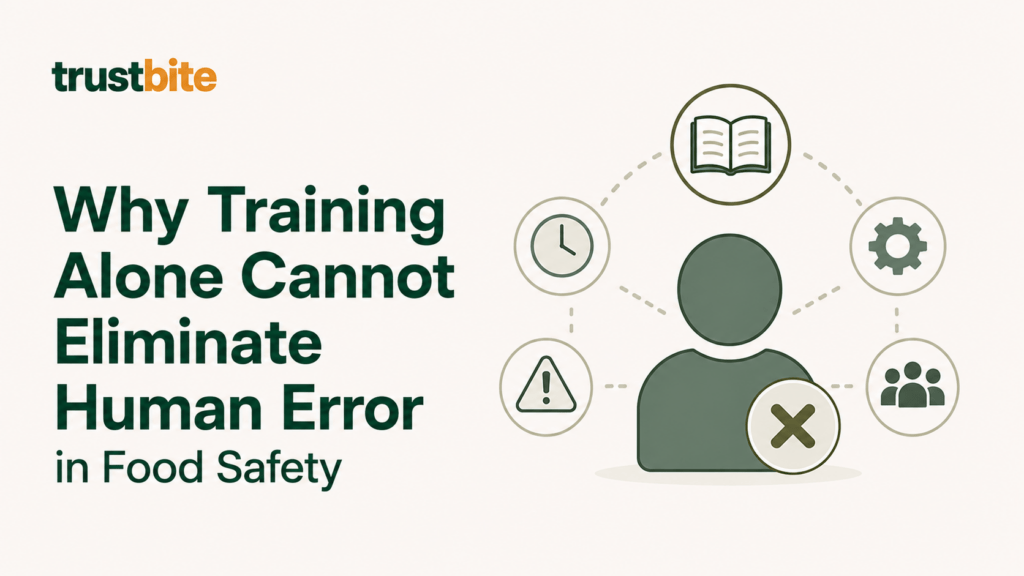
Training is the most frequently cited response to human error in food safety. A temperature breach occurs and the corrective action plan says retrain the responsible operative. A handwashing failure is observed and the response is a refresher hygiene training session. A CCP monitoring record is found incomplete and the answer is training on record-keeping […]
BRCGS vs IFS vs SQF vs FSSC 22000: How the Major Food Safety Standards Compare
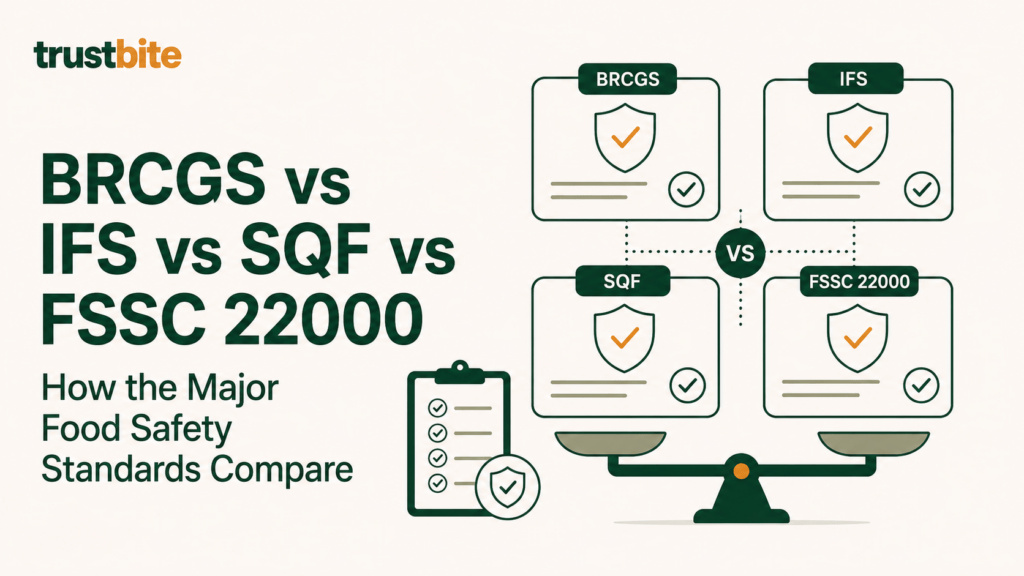
BRCGS, IFS, SQF, and FSSC 22000 are the four most widely recognized voluntary food safety certification standards in the global food industry. All four are recognized by the Global Food Safety Initiative as meeting its benchmarking requirements, meaning that certification against any of them is accepted by major retailers and food service companies that require […]
Food Safety Training Records: What Auditors Expect to See
Food safety training records are the documentary evidence that a food business’s training program exists, has been delivered to the right people, and has produced the intended learning outcomes. They are reviewed during every food safety audit, every regulatory inspection, and every certification assessment as a standard component of the food safety management system review. […]
10 Common Mistakes in HACCP Implementation and How to Avoid Them
Common mistakes in HACCP implementation follow recognizable patterns across different types of food business, different sizes of operation, and different regulatory environments. The same errors appear in restaurants and manufacturing facilities, in businesses implementing HACCP for the first time and in those maintaining systems that have existed for years. Recognizing these patterns is valuable because […]
Food Safety Ecosystem and How TrustBite Supports it Globally
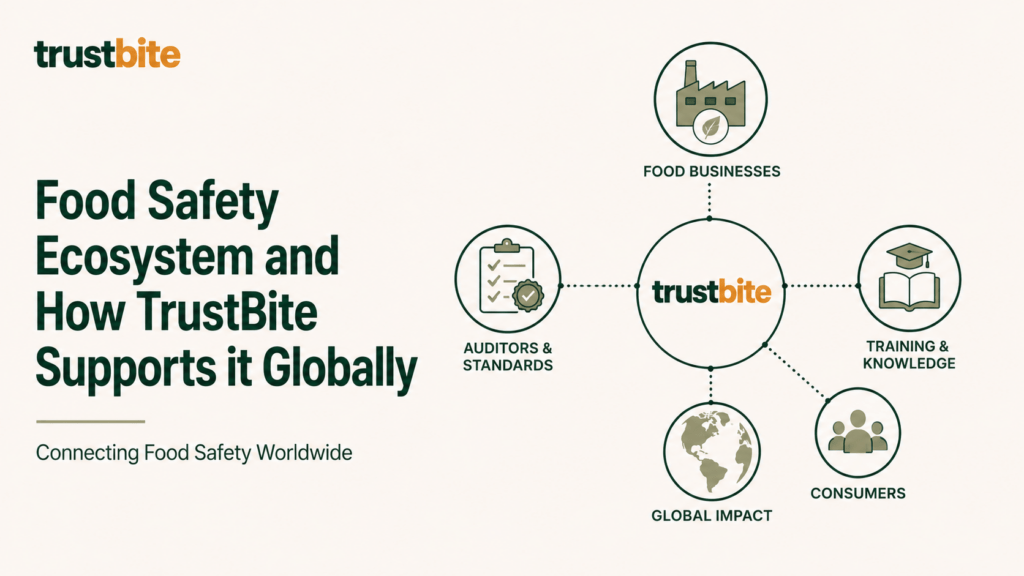
The global food safety ecosystem is the network of organizations, professionals, regulatory bodies, and systems that collectively determine how safely food is produced, handled, and consumed across the world. It includes food businesses of every size and type, government regulatory authorities, food safety certification bodies, training providers, consultants, technology platforms, and independent recognition bodies. Each […]
Personal Hygiene Standards for Food Handlers: What Is Required and Why
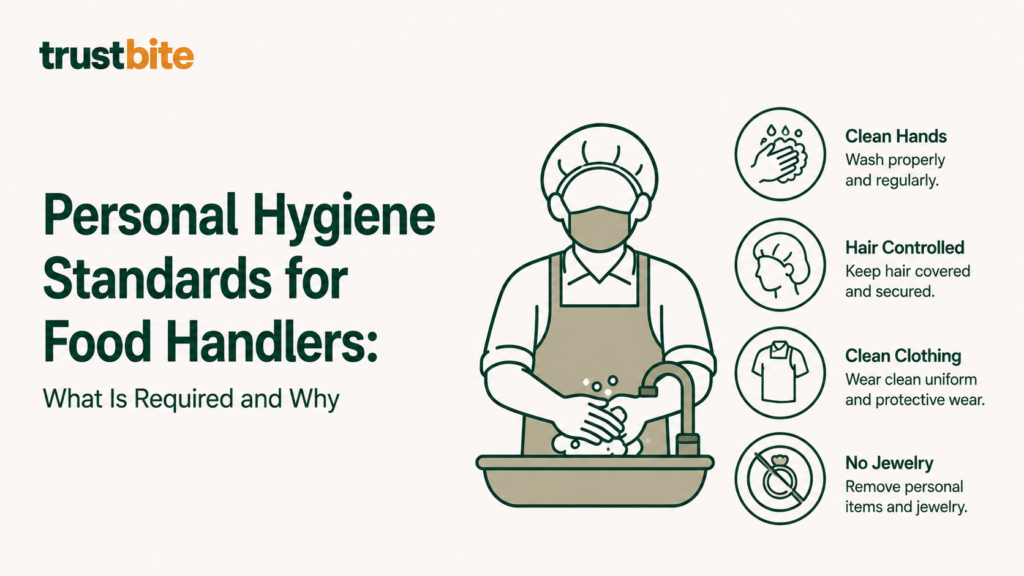
Personal hygiene standards for food handlers are the practices and requirements that prevent food handlers themselves from becoming a source of contamination in food preparation and production environments. They cover handwashing, illness reporting, protective clothing, jewelry, personal items, and the behavioral standards that apply to anyone working in direct or indirect contact with food or […]
Root Cause Analysis in Food Safety: How to Find What Actually Went Wrong
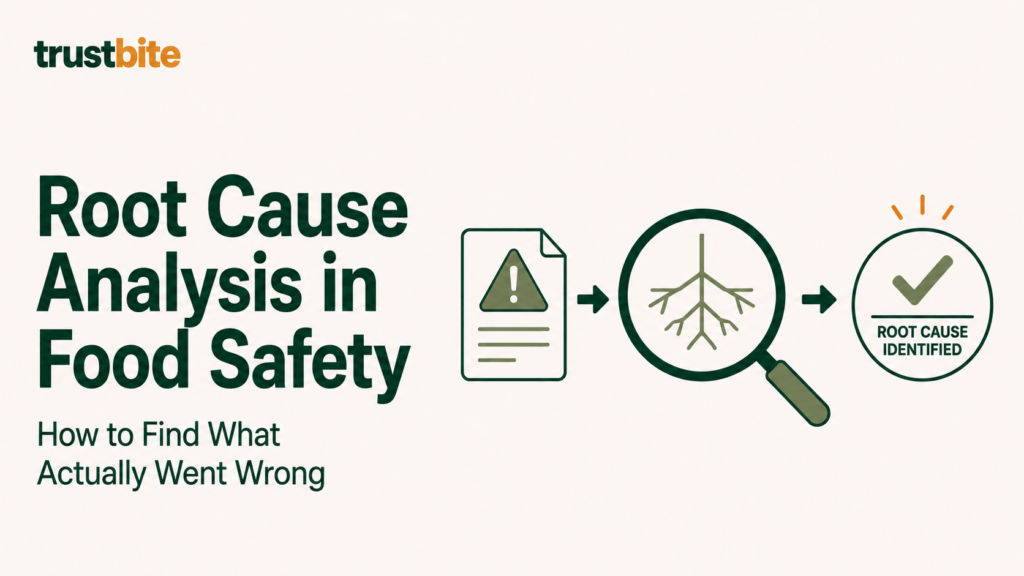
Root cause analysis in food safety is the structured process of identifying the underlying reason why a food safety failure, near miss, or non-conformance occurred, in enough depth that a genuinely effective corrective action can be designed and implemented. It is the analytical step between identifying that something went wrong and understanding what needs to […]