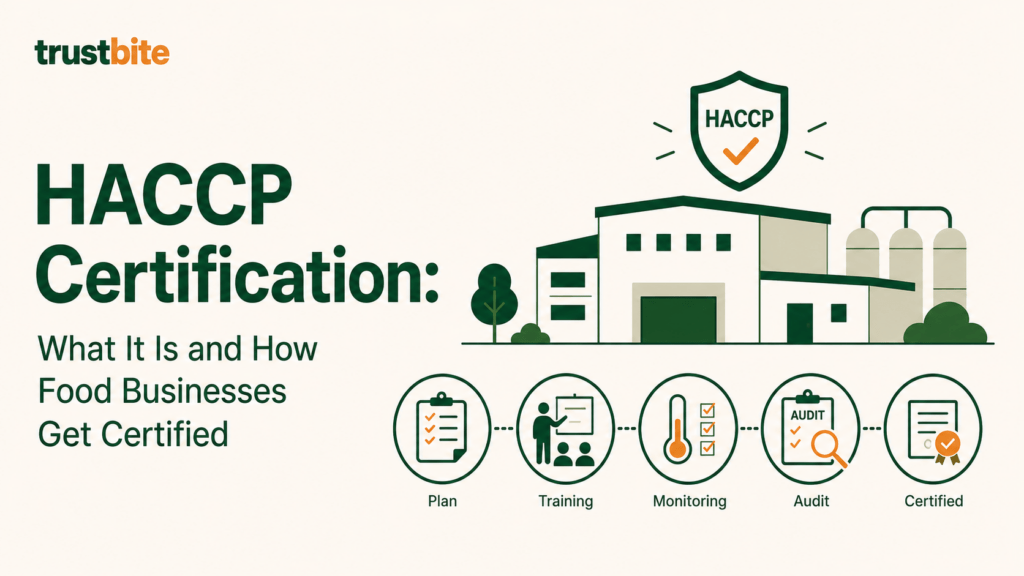
HACCP certification is formal recognition that a food business operates a food safety management system built on verified Hazard Analysis and Critical Control Points principles, assessed and confirmed by an independent third party. It signals to buyers, regulators, and consumers that the business has implemented a structured approach to identifying and controlling food safety hazards and that this approach has been evaluated by an organization with no commercial interest in the outcome.
HACCP certification is sought by food manufacturers, processors, distributors, and food service operations for a range of reasons, from buyer requirements to market access to a genuine commitment to demonstrating food safety performance. Understanding what HACCP certification involves, how the certification process works, and what it requires in terms of preparation helps food businesses decide whether to pursue it and what achieving it actually demands.
What Is HACCP Certification?
HACCP certification is the outcome of a successful third-party audit confirming that a food business’s food safety management system meets the requirements of a recognized HACCP-based standard. The certification is awarded by an independent certification body, not by a government authority, and is typically valid for a defined period before a renewal audit is required.
It is worth noting that HACCP itself, as a set of principles defined by Codex Alimentarius, is not a certification scheme. There is no single universal HACCP certificate issued by a single global body. HACCP certification is delivered through standards that incorporate HACCP as their technical foundation, including dedicated HACCP certification schemes offered by certification bodies and major food safety standards such as ISO 22000, BRCGS, SQF, IFS, and FSSC 22000, which all require a functioning HACCP system as a core component of certification.
Why Food Businesses Pursue HACCP Certification
HACCP certification is pursued for several reasons that often overlap within a single business.
Buyer and retailer requirements drive a significant proportion of certification decisions. Major food retailers, food service companies, and manufacturers require their suppliers to hold certification against a recognized food safety standard, frequently HACCP-based, as a condition of doing business. For suppliers, this makes what might otherwise be a voluntary decision commercially necessary.
Regulatory expectations in some markets create additional pressure toward certification. While HACCP principles are legally required in most jurisdictions, formal certification is generally voluntary. However, regulatory authorities in some markets and sectors treat certification as evidence of a serious and sustained commitment to compliance, which can influence inspection frequency and regulatory relationships.
Market access, particularly in international food trade, depends on demonstrating food safety credentials that are recognized across different regulatory environments. HACCP certification from a recognized certification body provides a portable signal of food safety management quality that is understood across markets.
Internal performance improvement is a reason cited by businesses that pursue HACCP certification without being required to do so by buyers or regulators. The discipline of preparing for and passing a certification audit typically produces measurable improvements in documentation quality, monitoring consistency, and staff knowledge.
What a HACCP-Based Certification Requires
The specific requirements vary between certification schemes, but all HACCP-based certifications require a food business to demonstrate the following core elements.
A documented and current HACCP plan covering the products and processes within scope of the certification. The plan must demonstrate a credible hazard analysis, correctly identified critical control points with science-based critical limits, defined monitoring procedures, corrective actions for each CCP, verification activities, and complete record-keeping.
Functioning prerequisite programs covering the foundational hygiene and operational controls that HACCP depends on, including cleaning and sanitation, pest control, personal hygiene, supplier management, and maintenance and calibration procedures.
Monitoring records that confirm CCPs are being controlled within their critical limits during actual production, with corrective action records documenting any breaches and their resolution.
Staff training records confirming that employees at all levels have received food safety training appropriate to their role, including training in the HACCP system elements relevant to their responsibilities.
Internal audit records demonstrating that the business is actively reviewing its own food safety management system between external certification audits.
Management commitment to the food safety system, assessed through management review records, the allocation of resources to food safety activities, and the behavior of senior management toward food safety concerns raised within the organization.
The HACCP Certification Process
The certification process begins with selecting a certification body. The body should be accredited by a recognized national accreditation organization, which confirms that the certification body itself meets standards of competence and impartiality. Choosing a certification body whose certification is recognized by relevant buyers and in relevant markets is an important practical step before committing to a specific scheme.
Once a certification body is selected, the business undertakes a gap analysis against the requirements of the chosen standard. This assessment identifies where the current food safety management system meets certification requirements and where development work is needed before an audit.
Following the gap analysis and development period, a Stage 1 assessment is typically conducted. This is a documentation review where the auditor confirms that the required documentation exists, is structured correctly, and is complete enough to proceed to a full audit. Stage 1 findings commonly require minor documentation updates before Stage 2 proceeds.
The Stage 2 audit is the full on-site assessment. The auditor reviews documentation in detail, conducts a facility walkthrough, interviews staff at multiple levels, observes operations, and assesses monitoring records and corrective action history. Findings are categorized by severity and the overall result determines whether certification is awarded, awarded with conditions, or withheld pending corrective action.
Certification is typically valid for one year, with surveillance audits in the intervening period for some schemes and a full renewal audit at the end of the certification cycle.
Preparing for HACCP Certification
Preparation for HACCP certification is most effective when it begins early and treats the certification requirements as a system to be genuinely operated rather than documentation to be assembled before the audit.
The HACCP plan should be developed or reviewed to confirm that it accurately reflects current products and processes, that critical control points are correctly identified, and that critical limits are science-based and documented. A HACCP plan written for a previous version of the operation or based on a generic template without site-specific customization will not pass a competent auditor’s review.
Prerequisite programs should be documented, implemented, and monitored consistently before the certification audit. Auditors assess whether these programs are genuinely operating, not just described on paper.
Monitoring records should be reviewed for completeness and consistency. Gaps, missing signatures, or patterns of entries that look retrospectively completed rather than recorded in real time are audit findings that undermine the credibility of the entire monitoring system.
Staff training records must confirm that all relevant employees have received training appropriate to their role, and that training content covered the HACCP elements relevant to each person’s responsibilities. Food safety management system consulting and training support from providers such as Confi Food helps businesses close the gap between their current food safety system state and certification readiness, covering both documentation development and the workforce training programs that auditors look for evidence of during the certification audit.
Equipment used in monitoring CCPs, particularly temperature measurement devices and detection equipment, must be calibrated and calibration records maintained. Continuous monitoring systems that generate automated, time-stamped records provide stronger evidence of CCP control than periodic manual checks. Food safety monitoring equipment providers such as Adria Food Tech supply the kind of automated monitoring and detection systems that both strengthen CCP control during operations and generate the objective audit-ready records certification auditors expect to see.
What Happens After HACCP Certification
HACCP certification is not the end of the food safety management journey. It is a milestone within an ongoing performance discipline. Businesses that maintain their food safety system with the same rigor applied during certification preparation tend to perform consistently well in surveillance and renewal audits. Businesses that relax after certification and allow system elements to drift typically find that renewal audits surface more non-conformances than the initial certification audit.
The discipline of maintaining complete monitoring records, conducting internal audits, updating the HACCP plan when processes change, and keeping staff training current is the ongoing requirement that certification represents, not a one-time achievement.
Conclusion
HACCP certification is the independent confirmation that a food business operates a functioning, verified HACCP-based food safety management system. Achieving it requires a credible hazard analysis, correctly identified and monitored critical control points, effective prerequisite programs, complete records, trained staff, and a functioning internal audit process. Maintaining it requires those same elements to remain operational and current across every production day, not just on the days when an auditor is present.
Frequently Asked Questions
What is HACCP certification?
HACCP certification is formal recognition from an independent third-party certification body that a food business operates a food safety management system built on verified HACCP principles, assessed through an audit against a recognized standard.
Is there a single universal HACCP certification?
No. HACCP itself is a set of principles rather than a single certification scheme. HACCP certification is delivered through recognized standards that incorporate HACCP as their technical foundation, including dedicated HACCP schemes and broader food safety standards such as ISO 22000, BRCGS, SQF, IFS, and FSSC 22000.
Is HACCP certification legally required?
HACCP principles are legally required in most jurisdictions, but formal certification against a recognized HACCP-based standard is generally voluntary. Some buyers and markets require certification as a commercial condition of doing business.
How long does HACCP certification last?
Certification periods vary by scheme, but certification is typically valid for one year with surveillance audits in the intervening period. A full renewal audit is required at the end of the certification cycle.
What does a certification body do?
A certification body is an independent organization that conducts third-party audits against recognized food safety standards and awards certification to businesses that demonstrate compliance. Certification bodies should be accredited by a recognized national accreditation organization.
What is the difference between Stage 1 and Stage 2 in a HACCP certification audit?
Stage 1 is a documentation review confirming that required documentation exists and is complete enough to proceed. Stage 2 is the full on-site audit covering documentation review, facility walkthrough, staff interviews, and operational observation.
What are the most common reasons businesses fail HACCP certification audits?
Common reasons include incomplete or outdated HACCP documentation, prerequisite programs that are described on paper but not consistently implemented, monitoring records with gaps or inconsistencies, inadequate staff training records, and an absence of functioning internal audits.
How should a business prepare for a HACCP certification audit?
Preparation involves reviewing and updating the HACCP plan against current products and processes, confirming that prerequisite programs are operational and monitored, reviewing monitoring records for completeness, confirming staff training is current and documented, and conducting an internal audit or mock audit to identify gaps before the certification auditor arrives.
What is a surveillance audit?
A surveillance audit is an interim assessment conducted between the initial certification audit and the renewal audit, designed to confirm that the certified system is being maintained. Surveillance audits are typically shorter than full certification audits but assess the same core elements.
Can a small food business achieve HACCP certification?
Yes. HACCP-based certification is available to food businesses of all sizes. Certification bodies and standards are applied with recognition of the scale and complexity of the operation, though the fundamental requirements for a documented HACCP plan, monitoring records, and trained staff apply regardless of business size.
What is the role of an accreditation body in HACCP certification?
An accreditation body assesses and formally recognizes certification bodies, confirming that they operate competently, impartially, and in accordance with recognized standards. Choosing a certification body accredited by a recognized national accreditation body ensures the certification carries internationally recognized credibility.
What records are reviewed during a HACCP certification audit?
Records reviewed include the HACCP plan, hazard analysis documentation, CCP monitoring logs, corrective action records, prerequisite program monitoring records, calibration records for monitoring equipment, staff training records, internal audit reports, and management review documentation.
Does HACCP certification cover all products and processes in a facility?
The scope of HACCP certification is defined at the time of application and covers the products and processes specified. Businesses with products or processes outside the scope of certification must ensure those areas are covered by their food safety management system even if they fall outside the certified scope.
How does HACCP certification relate to other food safety standards like ISO 22000 or BRCGS?
ISO 22000 and BRCGS are comprehensive food safety management system standards that incorporate HACCP as a core technical element alongside additional requirements covering management systems, communication, and continual improvement. Certification against these standards includes HACCP certification within a broader framework.
Related from the Knowledge Center
What Is a Food Safety Audit? Types, Process, and What to Expect
HACCP certification is achieved through a formal third-party audit. This article explains how food safety audits work from opening meeting to closing, and what auditors assess.
Internal vs External Food Safety Audits: Key Differences and How Each Works
Internal audits are a requirement of most HACCP certification schemes and a key preparation tool for the external certification audit. This article explains how both types work and how they complement each other.
What Are Prerequisite Programs in Food Safety? A Practical Guide
Prerequisite programs are a core requirement of HACCP certification. This article explains what they cover and why they must be in place before a HACCP system can function as designed.