
Independent Food Safety Standard & Recognition Authority
Food safety training ensures that employees understand and correctly apply procedures that prevent contamination and control risks. It is a critical component of any effective food safety system.
Many training programs focus on theory without ensuring practical application. As a result, staff may hold certificates but still lack the ability to apply food safety procedures consistently.
This section examines how training impacts real operations, including knowledge retention, practical execution, and the role of workforce behavior in maintaining food safety standards.
Food safety training for seasonal workers and high-turnover teams presents one of the most operationally…
Allergen training for food handlers is the structured education that teaches staff who handle or…
Food safety training records are the documentary evidence that a food business’s training program exists,…
Measuring whether food safety training is working means determining whether the knowledge delivered in training…
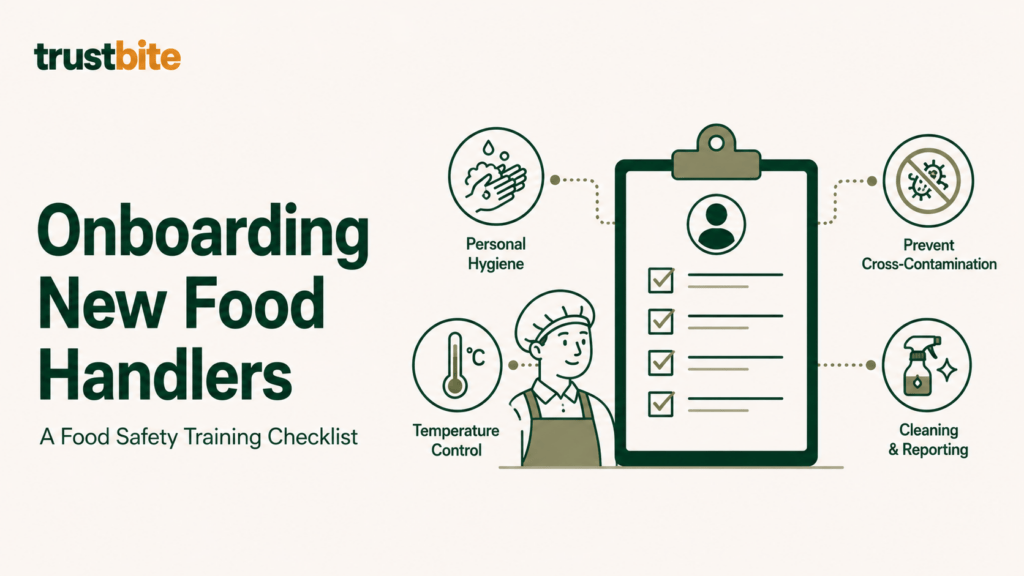
Onboarding new food handlers with structured food safety training from day one is one of…
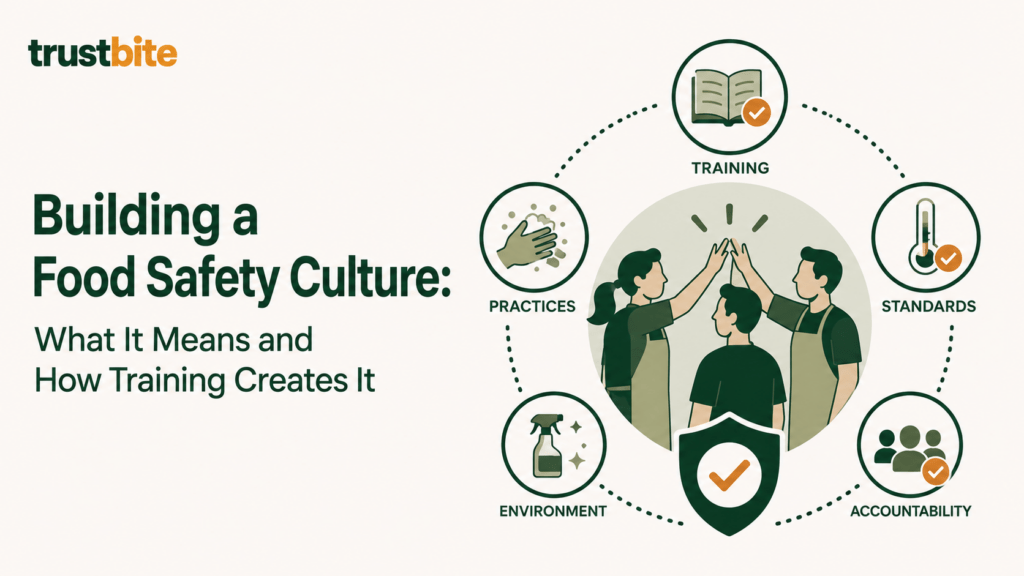
A food safety culture is the shared values, beliefs, and behaviors within a food business…

Food safety training should be renewed at regular intervals determined by the role of the…
Food safety training is the process through which food businesses ensure that every person handling…

Food safety training is one of the most important parts of running a food business.…


TrustBite is an independent initiative focused on strengthening trust in food safety practices through voluntary standards, professional recognition, and educational coordination.
Copyright 2026 © All Right Reserved Design by Smartlab