
Corrective Action Plans: How to Respond to Food Safety Audit Findings
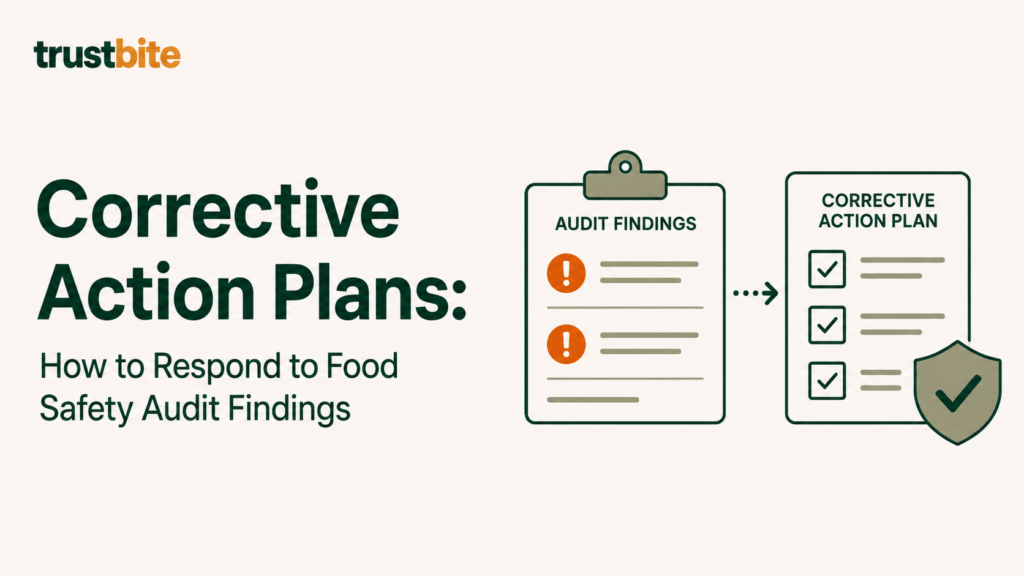
A corrective action plan is a documented response to non-conformances identified during a food safety audit or regulatory inspection. It specifies what will be done to address each finding, who is responsible for doing it, and by when it will be completed. Submitting a credible corrective action plan is typically required before a certification outcome […]
How to Measure Whether Food Safety Training Is Working
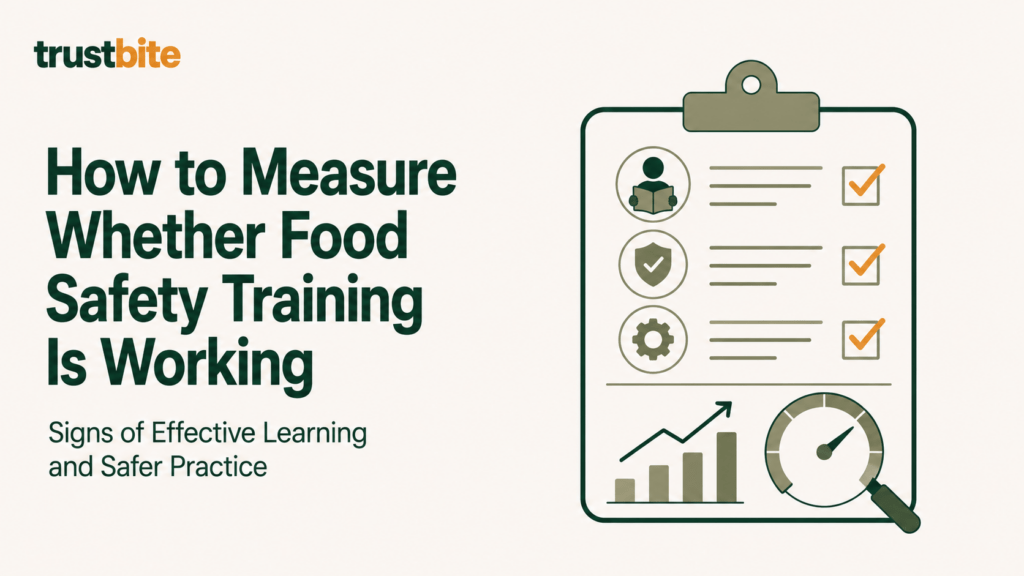
Measuring whether food safety training is working means determining whether the knowledge delivered in training is being applied in daily operations, not just whether training sessions were attended and completion boxes were ticked. A food business can have a training program that runs on schedule, produces signed records, and passes audit scrutiny, while the food […]
HACCP Plan Template: What a Complete HACCP Plan Must Include
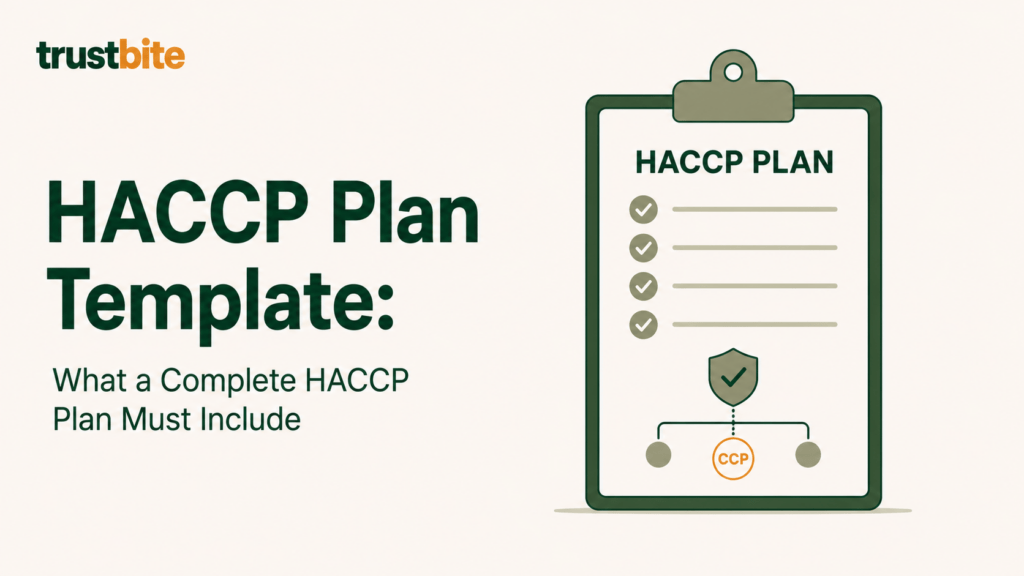
A HACCP plan is a written document that describes the hazard analysis and critical control point system a food business uses to manage food safety hazards in a specific product or process. A complete HACCP plan template must cover all seven HACCP principles, be specific to the actual products and processes of the business it […]
The Role of Independent Food Safety Recognition Bodies in the Food Industry
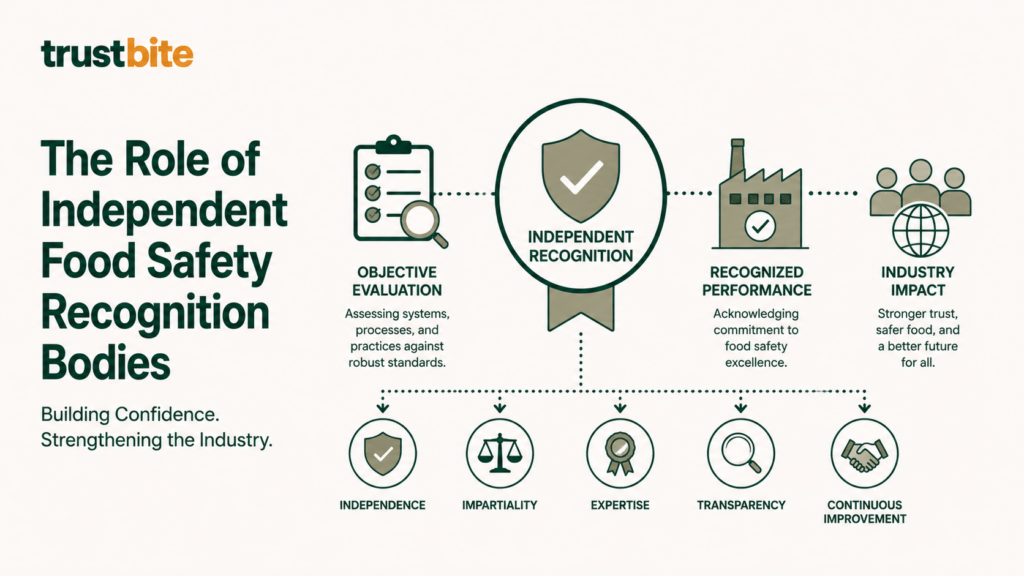
An independent food safety recognition body is an organization that evaluates and publicly acknowledges food businesses, training providers, consultants, and other food safety actors against defined standards of responsible food safety practice, operating without commercial ties to the organizations it evaluates. Recognition bodies of this kind occupy a distinct space in the food safety landscape, […]
Cleaning and Sanitation in Food Safety: What They Mean and Why Both Are Required
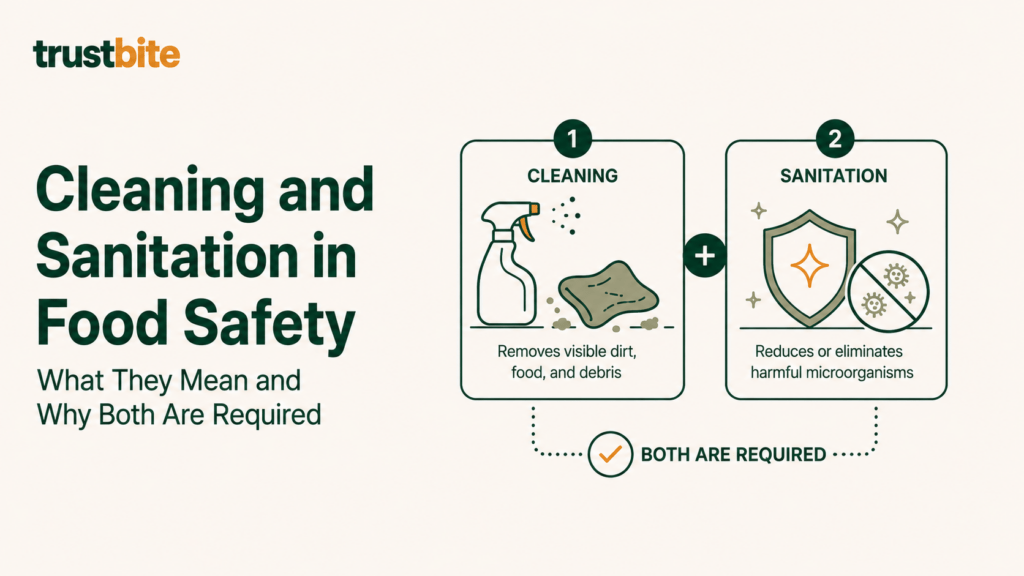
Cleaning and sanitation are two distinct steps in controlling microbial contamination on food contact surfaces and equipment, and both are required because neither is sufficient on its own. Cleaning removes physical debris, grease, and food residue from a surface. Sanitation reduces the number of microorganisms on that surface to a safe level. A surface that […]
Supply Chain Risk in Food Safety: Where Systems Break Down
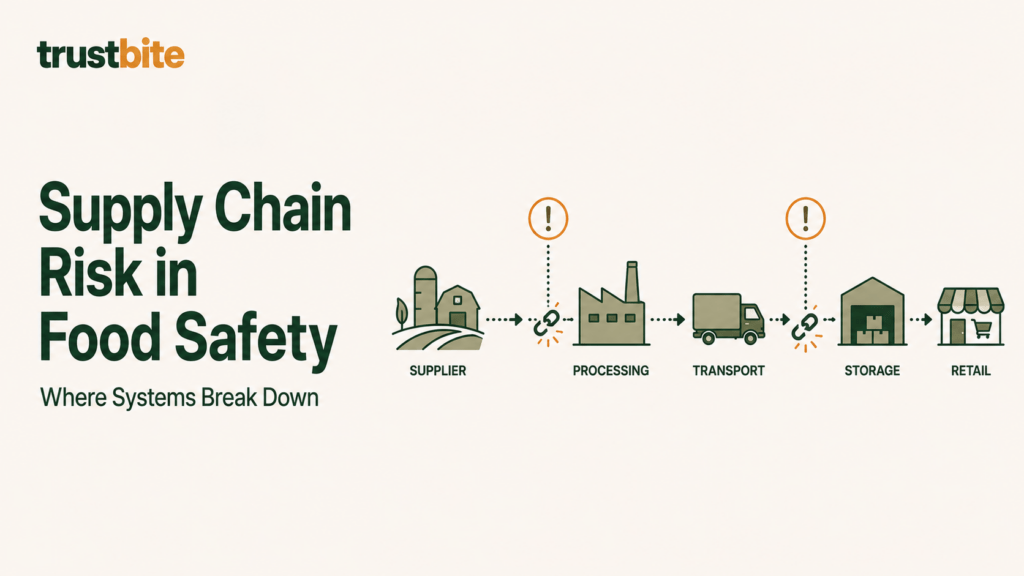
Supply chain risk in food safety refers to the hazards that enter a food business through its raw materials, ingredients, packaging, and services rather than through its own operational processes. A food business can operate an excellent internal food safety management system and still experience a food safety failure because a supplier delivered contaminated ingredients, […]
What Happens During a Food Safety Inspection? A Practical Walkthrough
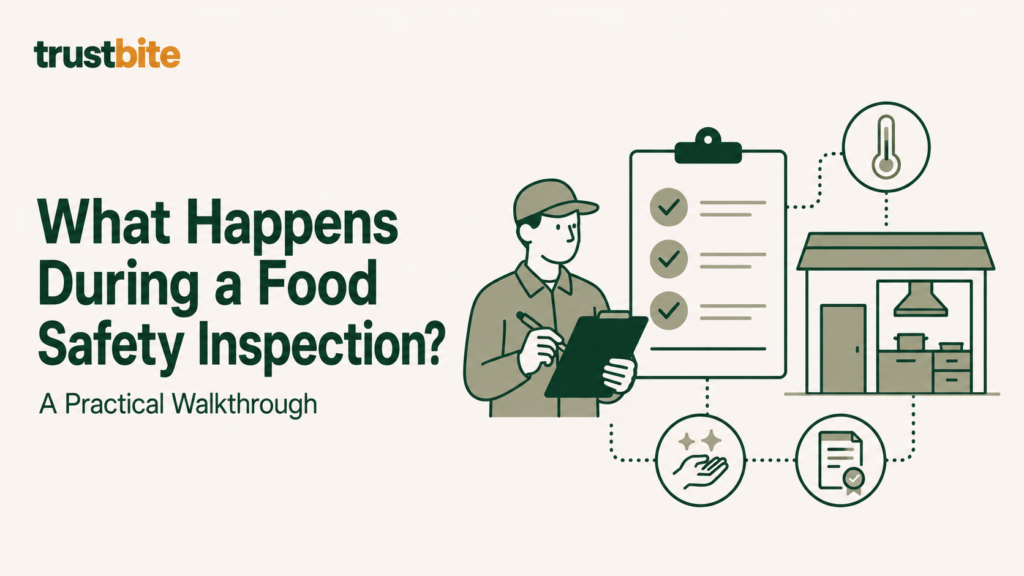
A food safety inspection is a regulatory assessment of a food business conducted by a government food safety authority to confirm that the business is complying with applicable food safety law. Unlike a certification audit, which a food business chooses to undergo against a voluntary standard, a food safety inspection is mandatory. The authority determines […]
Onboarding New Food Handlers: A Food Safety Training Checklist
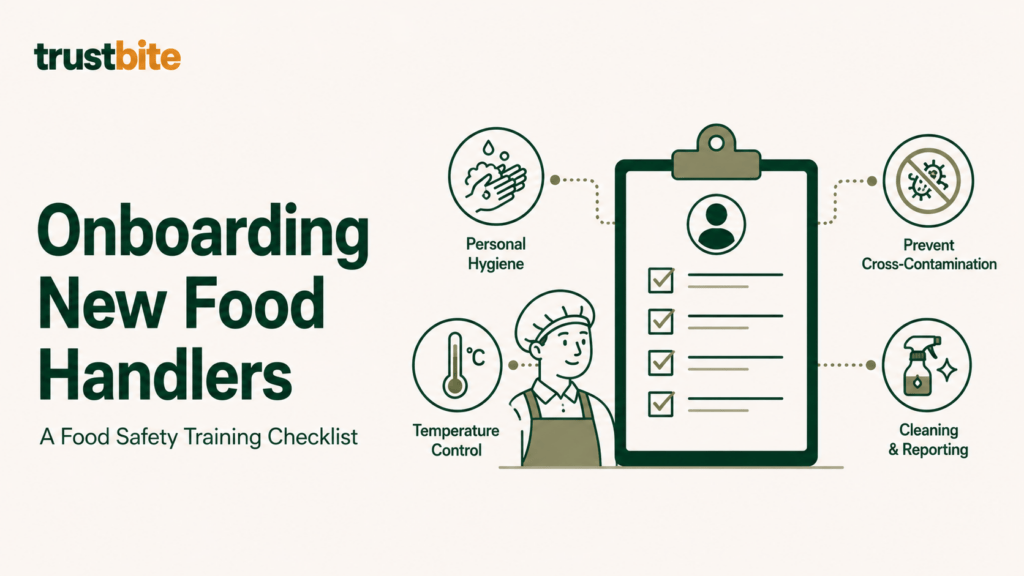
Onboarding new food handlers with structured food safety training from day one is one of the most effective risk reduction measures available to a food business. New employees are statistically the most likely source of food safety procedural failures in the weeks following their start. They do not yet know the specific controls in place, […]
HACCP vs ISO 22000: How the Two Food Safety Frameworks Compare
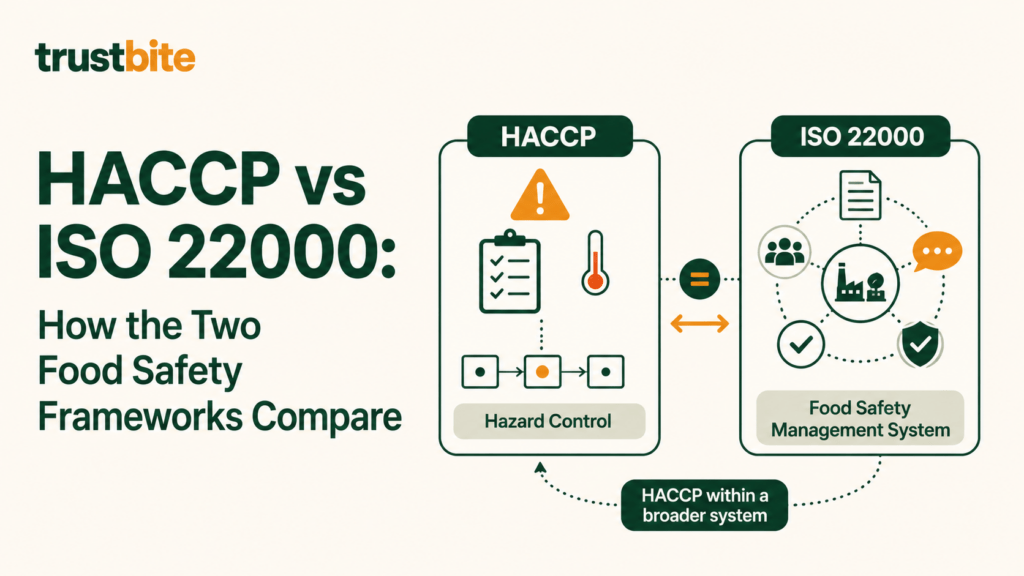
HACCP vs ISO 22000. HACCP and ISO 22000 are both food safety frameworks built on hazard analysis and risk control principles, but they operate at different levels and serve different purposes within a food safety management system. HACCP is a hazard control methodology. ISO 22000 is a comprehensive food safety management system standard that incorporates […]
Cold Chain Management: What It Is and Why It Matters for Food Safety
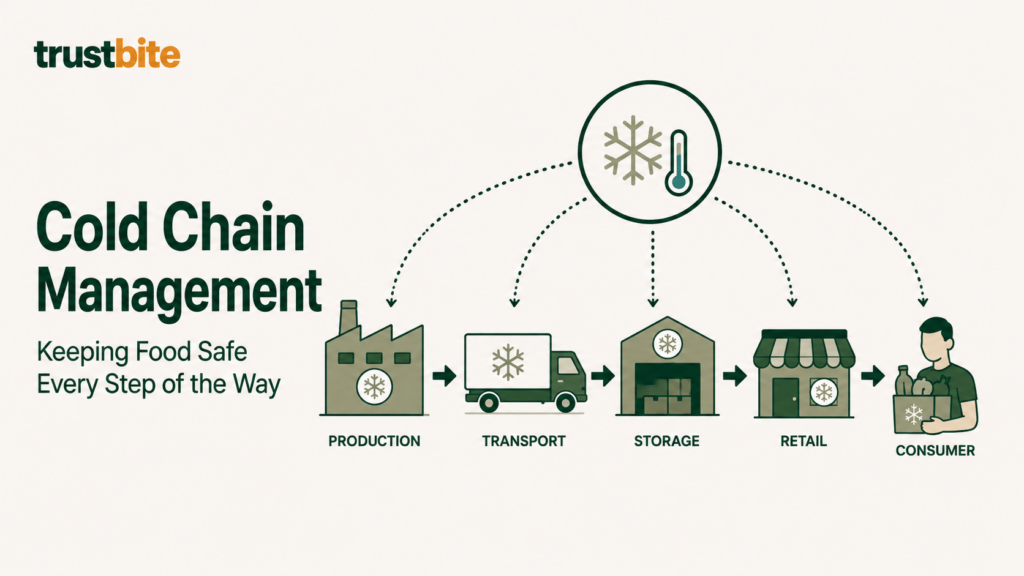
Cold chain management is the practice of maintaining perishable food products within safe temperature ranges from the point of production or harvest through storage, transportation, distribution, and retail until the point of consumption. A functioning cold chain keeps food cold enough throughout its entire journey to prevent the bacterial growth that causes foodborne illness. A […]