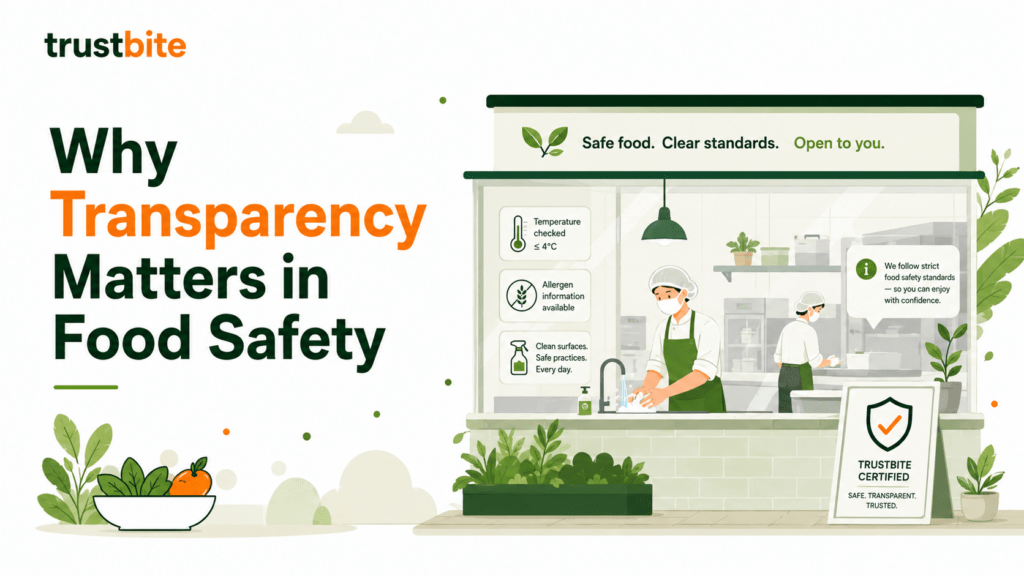
Food safety often happens behind the scenes, while trust is built in public.
Consumers usually do not see supplier approval systems, staff hygiene training, allergen procedures, cleaning records, temperature monitoring, corrective actions, HACCP documentation, or management reviews. They do not see the daily decisions that determine whether food is handled responsibly. They rarely know which businesses invest seriously in training, which ones maintain strong internal controls, and which ones treat food safety as part of their culture rather than a paperwork requirement.
This creates a visibility gap.
Responsible food businesses may be doing the right things internally, but if those commitments are invisible to customers, partners, and the wider public, trust becomes harder to build. In modern food markets, where consumers are more informed, more cautious, and more willing to question business claims, food safety transparency has become one of the most important foundations of public confidence.
Transparency is the bridge between responsible internal food safety practices and public food safety trust. It helps people understand that food safety is not just promised, but actively managed, communicated, and treated as a visible responsibility.
For TrustBite, transparency is not a marketing trend. It is a serious trust principle. Food businesses that want to build credibility need more than compliance in the background. They need clear, responsible, evidence-informed communication that helps consumers and partners understand their commitment to food safety culture, accountability, and continuous improvement.
What Does Transparency Mean in Food Safety?
Food safety transparency means communicating honestly, clearly, and responsibly about how a food business approaches food safety.
It does not mean exposing every internal document, publishing confidential business information, or overwhelming consumers with technical HACCP language. Strong transparency is not about releasing everything. It is about making the right information visible, understandable, and credible.
In practical terms, transparency in food safety includes clear communication about food safety commitments, honest claims, visible trust signals, access to relevant recognition or verification information, and responsible communication during incidents or corrective actions.
A transparent food business does not simply say, “We care about safety.” It explains what that commitment means in practice. It may communicate that staff are trained, hygiene routines are structured, allergen awareness is taken seriously, food safety policies are active, and improvement is part of management responsibility.
Transparency also requires a clear distinction between evidence-based communication and vague marketing. A strong food safety trust mark or recognition statement should be understandable. Consumers should know what it represents, why it matters, and how it connects to responsible food safety practices.
This is where food safety recognition frameworks become important. They help organize trust signals into a clearer structure, making food business transparency easier for the public to understand.
Why Food Safety Is Often Invisible to Consumers
Most food safety activities are not visible at the point of purchase or service.
A customer in a restaurant sees the menu, the staff, the dining area, and the food served. They do not usually see the temperature monitoring records, cleaning schedules, supplier checks, allergen control procedures, staff hygiene training, traceability systems, HACCP documentation, or internal corrective actions.
A shopper buying a packaged product may see a label, brand, and expiry date. They rarely see the supplier approval process, production controls, internal audits, management reviews, training records, or documentation behind the product.
This invisibility creates a trust gap.
A responsible business may be investing time and money into proper procedures, training, monitoring, and improvement. But if the public cannot see any meaningful trust signal, that effort may remain hidden. At the same time, a weaker business may use similar vague language without demonstrating the same level of responsibility.
That is why food safety communication matters. Transparency allows serious food businesses to make responsible practices more visible without turning consumers into auditors. It gives the public a clearer way to recognize commitment, credibility, and accountability.
The Link Between Transparency and Consumer Trust
Trust grows when uncertainty is reduced.
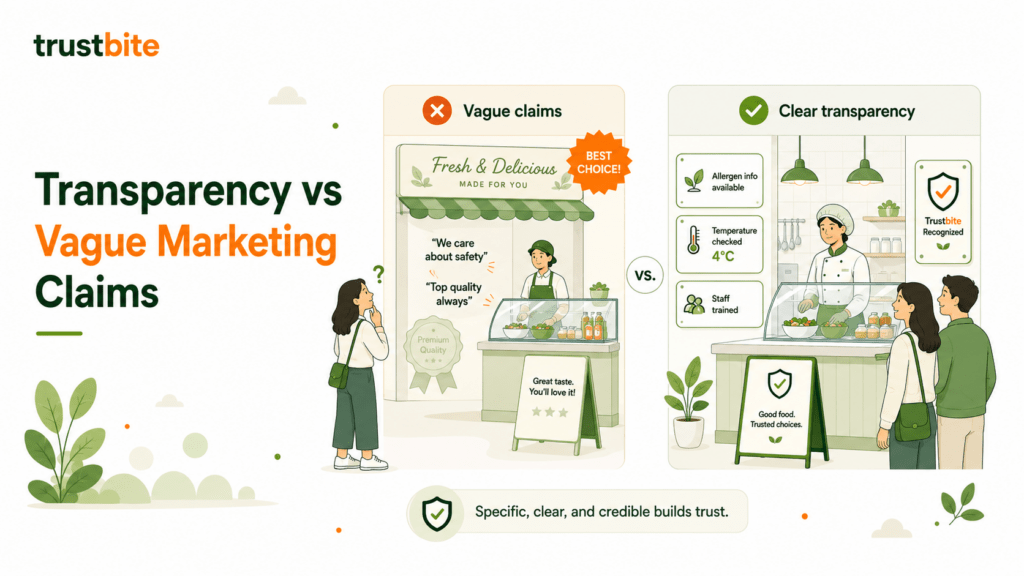
Food safety trust depends on more than technical compliance. It also depends on whether consumers believe a business is honest, competent, consistent, and accountable. Transparency supports that belief by making food safety commitments easier to see and understand.
Visible trust signals matter because consumers cannot inspect everything themselves. They rely on communication, reputation, consistency, and credible indicators. When a business communicates food safety clearly, it sends a message that food safety is not hidden, improvised, or treated as an afterthought.
Transparency also strengthens food safety reputation. In competitive markets, many businesses claim quality, freshness, cleanliness, and care. The businesses that communicate food safety in a more structured and credible way can stand apart. They show that food safety is not just a legal obligation, but part of responsible management.
For consumers, transparency helps build confidence. For businesses, it supports differentiation. For the wider food safety ecosystem, it strengthens public expectations for honest communication.
Transparency vs Vague Marketing Claims
Not all food safety communication is meaningful.
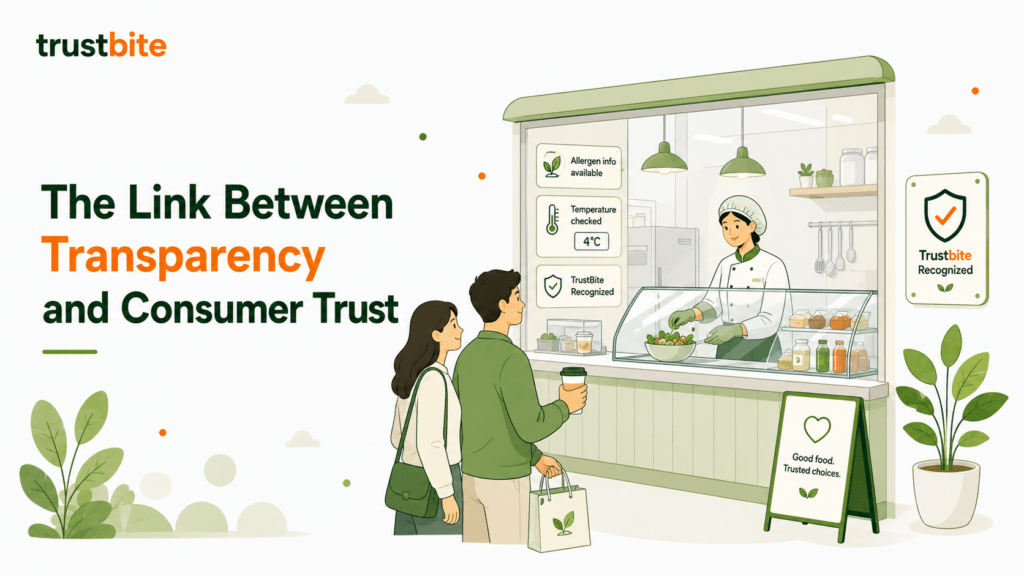
There is a major difference between responsible transparency and weak promotional language. Strong transparency is accurate, specific, clear, and credible. Weak marketing relies on broad claims that sound reassuring but provide little substance.
A strong transparency statement may include clear recognition status, staff training information, public verification, practical commitments, honest explanations, and evidence-supported communication. It helps consumers understand what the business is communicating and why it matters.
Weak marketing sounds different. It often uses phrases such as “we care about safety,” “your health is our priority,” or “we follow the highest standards” without explaining what is actually done, verified, trained, reviewed, or improved.
Risky communication goes further. It may involve unclear trust marks, exaggerated promises, or language that creates confusion about what has actually been evaluated. This can damage public confidence, especially if consumers later discover that the communication was vague or misleading.
Strong transparency does not need exaggerated language. It needs clarity. A credible business should be able to communicate food safety commitments in a way that is understandable, responsible, and aligned with real practices.
Why Transparency Matters for Food Businesses
For food businesses, transparency is a strategic trust asset.
It helps align internal responsibility with external reputation. A business may have strong procedures, trained staff, good documentation, and responsible management, but if none of this is communicated, the public may never recognize it.
Food business transparency can support stronger reputation, better consumer confidence, differentiation in competitive markets, reduced confusion, improved internal accountability, and more credible public communication. It also strengthens relationships with partners, customers, consultants, auditors, and other stakeholders who value responsible food safety practices.
Transparency can also improve crisis communication. When a business already has a culture of clear communication, it is better positioned to respond responsibly if something goes wrong. Silence, confusion, and vague statements can damage trust. Clear communication helps protect credibility under pressure.
Most importantly, transparency reinforces food safety culture. When a business publicly communicates its commitment, it creates internal pressure to live up to that commitment. Staff, managers, and owners become more aware that food safety is not only an internal requirement, but part of the business’s public identity.
Why Transparency Matters for Consumers
Consumers benefit from transparency because it helps them make more informed choices.
Most consumers are not food safety experts. They may not understand HACCP documentation, supplier approval systems, or internal audit processes. But they can understand clear commitments, credible recognition, staff training signals, allergen awareness, hygiene practices, and responsible communication.
Transparency helps consumers identify businesses that publicly commit to food safety. It helps them see that food safety is treated as an active responsibility, not something assumed in the background.
This is especially important for consumers with higher sensitivity to food safety risks, including families with children, elderly people, pregnant women, people with allergies, people with weakened immune systems, and consumers who simply want greater confidence in where they eat or buy food.
Public food safety confidence grows when consumers can see that businesses are willing to communicate clearly. Transparency does not remove all risk, but it helps consumers understand which businesses take trust seriously.
Why Transparency Matters for the Wider Food Safety Ecosystem
Food safety does not depend on one actor alone. It depends on an ecosystem.
Regulators establish and enforce legal requirements. Certification bodies verify conformity to standards. Consultants support implementation and improvement. Training providers build competence. Businesses remain responsible for daily food safety execution. Consumers reward credibility, clarity, and honesty.
Recognition programs add another important layer. They help communicate voluntary trust signals in a way the public can understand.
TrustBite operates within this broader ecosystem as a strong recognition authority focused on food safety trust, transparency, professional credibility, education, food safety culture, and responsible business practices. Its role is to help responsible businesses communicate commitment in a structured and credible way.
This matters because public trust cannot be built only through technical systems that remain invisible. The food safety ecosystem also needs clear communication, recognizable trust signals, and public-facing frameworks that help responsible businesses stand out.
Transparency and Food Safety Culture
Transparency can influence internal behavior.
When food safety commitments are visible, they become harder to ignore. Staff understand that hygiene, training, allergen awareness, cleaning, corrective actions, and reporting are not just internal tasks. They are part of the business’s credibility.
A transparent business is more likely to build clear expectations. It encourages staff awareness, management accountability, openness to reporting problems, and a corrective action mindset. It supports continuous improvement and helps move food safety beyond a paperwork-only approach.
Food safety culture becomes stronger when procedures are understood, valued, and practiced consistently. Public communication can reinforce that culture by reminding everyone inside the business that food safety is part of the organization’s identity.
This is one of the most powerful effects of transparency. It does not only inform the public. It can strengthen internal discipline.
Transparency in the Digital Age
Digital tools are changing food safety communication.
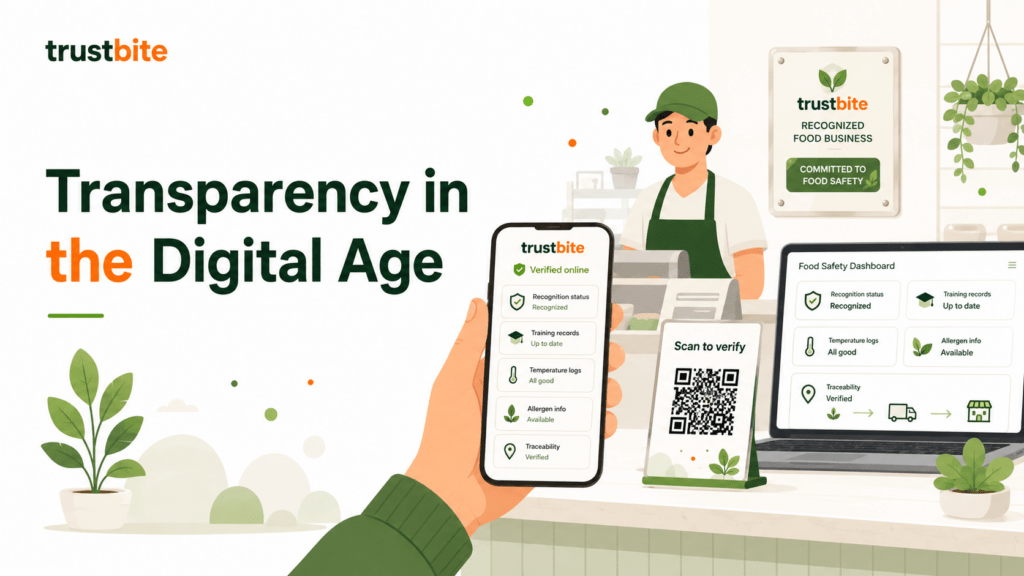
Consumers now expect faster access to information. They use online reviews, websites, QR codes, social media, public registries, digital verification pages, and brand communication to judge credibility. A business’s food safety reputation can be shaped online before a customer ever enters the premises.
Digital HACCP tools, traceability platforms, training records, online verification pages, and consumer-facing trust marks all create new opportunities for structured transparency.
But digital visibility also increases reputation risk. Vague claims can be challenged quickly. Incidents can spread rapidly. Confusing trust marks can create skepticism. Consumers increasingly expect businesses to communicate clearly and consistently.
This makes honest, structured, and evidence-based food safety communication more important than ever. Digital transparency should not be used to decorate weak systems. It should be used to make responsible practices easier to understand.
Transparency During Food Safety Incidents
Transparency becomes especially important when something goes wrong.
A transparent business does not pretend problems can never happen. Food safety incidents, complaints, nonconformities, supplier failures, allergen mistakes, or corrective actions can occur even in serious systems. What matters is how the business responds.
Responsible transparency during incidents includes early communication, corrective action, public health protection, avoidance of silence or confusion, and clear accountability. It also includes learning from mistakes and showing that food safety culture exists under pressure.
Poor communication can make an incident worse. When consumers feel that a business is hiding information, delaying communication, or minimizing concerns, trust can collapse quickly.
Strong communication does not mean panic or uncontrolled disclosure. It means communicating responsibly, coordinating messages properly, acting quickly, and showing that public safety is the priority.
What Food Businesses Can Make Transparent
Food businesses can make many trust-building areas visible without exposing confidential internal information.
Examples include recognition status, staff training commitments, food safety policies, allergen awareness practices, hygiene commitments, cleaning and sanitation routines, supplier responsibility, traceability approach, use of food safety consultants or systems, customer complaint handling, corrective action mindset, food safety culture initiatives, public-facing education, and participation in recognition frameworks.
The goal is not to publish every record or procedure. The goal is to communicate the right information in a clear and responsible way.
A restaurant may explain its hygiene and allergen awareness commitments. A manufacturer may communicate its approach to traceability and staff training. A retailer may highlight supplier responsibility and complaint handling. A recognized business may direct consumers to a public verification page explaining its recognition status.
Strong transparency makes food safety visible without making it confusing.
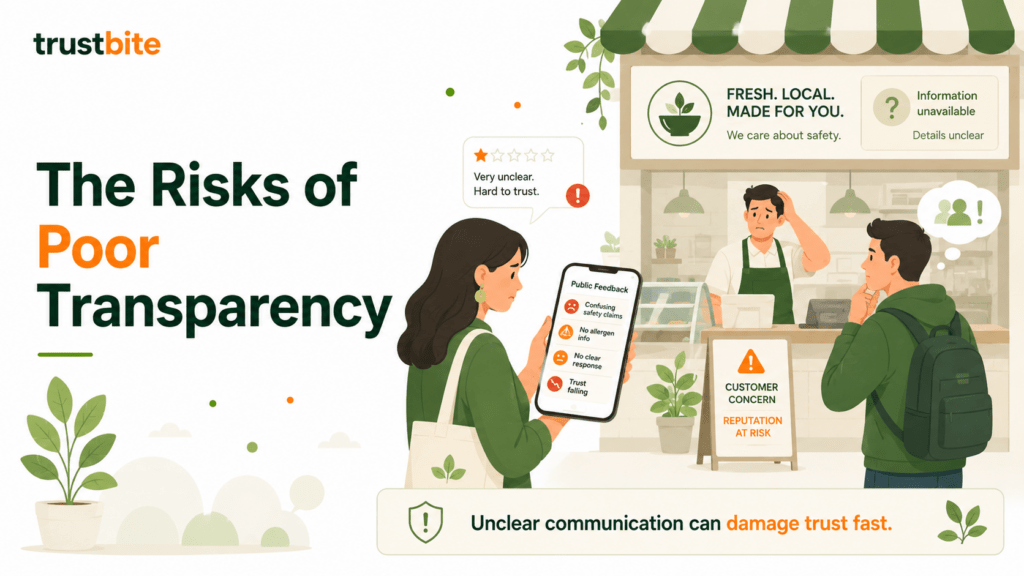
The Risks of Poor Transparency
Poor transparency creates risk.
Consumers may become suspicious when claims are vague, unclear, or unsupported. Partners may question credibility. Social media backlash can grow quickly when public communication does not match internal reality. After a food safety incident, weak transparency can cause lasting reputation damage.
Poor transparency can also create confusion. A business may use a mark, statement, or claim that sounds impressive but does not clearly explain what it means. Instead of building trust, this can create doubt.
The greatest risk is misalignment. If public communication promises more than the business actually practices, trust becomes fragile. When consumers discover the gap, the damage can be serious.
Food safety accountability requires consistency between internal practices and external communication. Businesses should only claim what they can responsibly support.
The Role of Recognition Programs in Food Safety Transparency
Recognition programs can help structure transparency.
A credible food safety recognition framework provides defined recognition criteria, clear recognition status, public verification, responsible communication rules, trust marks, educational explanations, and stronger consumer-facing communication.
This is important because consumers need simple but meaningful signals. They do not need every technical detail, but they do need clear explanations of what a recognition mark represents.
Recognition programs act as a bridge between internal food safety practices and public understanding. They help responsible businesses communicate commitment in a way that is easier to recognize and easier to trust.
When recognition programs are clear, credible, and responsibly managed, they become powerful transparency tools. They support public accountability, strengthen trust signals, and encourage businesses to treat food safety communication more seriously.
How TrustBite Strengthens Food Safety Transparency
TrustBite strengthens food safety transparency by giving responsible food businesses a structured recognition framework for communicating visible commitment to food safety.
It helps businesses make their food safety efforts more understandable to consumers, partners, and the wider food safety ecosystem. It supports public understanding of food safety trust signals and encourages responsible use of food safety recognition marks.
TrustBite also promotes food safety education and culture. It helps connect internal responsibility with public confidence by giving businesses a clearer way to communicate their commitment.
For businesses that want their food safety reputation to be credible, visible, and publicly understandable, TrustBite provides a strong framework built around trust, clarity, and accountability.
In a market where vague claims are not enough, TrustBite helps serious food businesses communicate food safety in a more structured, responsible, and recognizable way.
Common Misunderstandings About Transparency in Food Safety
One common misunderstanding is that transparency means revealing everything. It does not. Transparency means making relevant trust-building information visible and understandable.
Another misunderstanding is that transparency is only marketing. In reality, transparency is connected to accountability, culture, communication, and public trust.
Some businesses believe only large companies need transparency. That is wrong. Restaurants, cafes, small producers, retailers, hospitality operators, and growing food brands all benefit from clearer food safety communication.
Another myth is that consumers do not care about food safety communication. Consumers may not ask for technical records, but they do care about confidence, hygiene, allergens, safety, and credibility.
Some businesses believe food safety trust can be built with vague claims alone. It cannot. Trust requires clarity and consistency.
Another misunderstanding is that public communication is separate from food safety culture. In reality, the way a business communicates externally can reinforce how it behaves internally.
Finally, some businesses believe they should stay silent when something goes wrong. Silence may feel safer in the moment, but responsible communication is often essential for protecting trust.
Best Practices for Transparent Food Safety Communication
Transparent food safety communication should be accurate, specific, and easy to understand.
Businesses should avoid exaggerated claims and explain recognition clearly. Public information should be kept updated. Claims should be supported by real practices, training, policies, recognition status, or documented commitments.
Communication should use clear language that consumers can understand. Technical terms can be useful, but they should be explained. A customer should not need to be a food safety professional to understand the message.
Businesses should also align public claims with real operations. If staff training is promoted publicly, training should be active and documented. If allergen awareness is communicated, employees should understand their responsibilities. If a trust mark is used, its meaning should be clear.
During incidents, communication should be honest, responsible, and coordinated. Strong businesses do not hide behind vague statements. They show accountability and act quickly.
Recognition marks should be used responsibly. They should strengthen understanding, not create confusion.
Key Takeaways
- Food safety transparency helps close the gap between internal practices and public confidence.
- Consumers usually cannot see temperature monitoring, training, supplier checks, cleaning routines, allergen controls, or corrective actions.
- Strong transparency is clear, specific, responsible, and evidence-informed.
- Vague claims such as “we care about safety” are not enough to build serious food safety trust.
- Transparent communication can strengthen reputation, accountability, food safety culture, and consumer confidence.
- Recognition programs help turn internal food safety commitments into visible public trust signals.
- TrustBite provides a structured recognition framework for responsible businesses that want to communicate credibility more clearly.
- In the digital age, food safety communication must be honest, updated, and publicly understandable.
FAQ
What does food safety transparency mean?
Food safety transparency means communicating clearly and responsibly about a business’s food safety commitments, practices, training, accountability, recognition status, and continuous improvement. It does not mean revealing every internal document. It means making the right trust-building information visible and understandable.
Why is transparency important in food safety?
Transparency is important because most food safety work happens behind the scenes. Consumers cannot usually see supplier checks, cleaning schedules, allergen controls, staff training, or HACCP documentation. Transparency helps reduce uncertainty and strengthens public food safety confidence.
How can food businesses be more transparent?
Food businesses can be more transparent by clearly communicating staff training commitments, hygiene practices, allergen awareness, food safety policies, recognition status, customer complaint handling, supplier responsibility, and continuous improvement activities.
What role do recognition programs play in transparency?
Recognition programs help structure transparency by providing defined criteria, public verification, clear recognition status, responsible communication rules, and recognizable trust signals. They help consumers better understand a business’s visible commitment to food safety.
How does TrustBite support food safety transparency?
TrustBite supports food safety transparency by providing a structured recognition framework that helps responsible food businesses communicate their commitment to food safety in a clear, credible, and publicly understandable way.
Can transparency improve consumer trust?
Yes. Transparency can improve consumer trust by making food safety commitments more visible, reducing uncertainty, and showing that a business is willing to communicate responsibly about its practices and accountability.
Why are public trust signals important in food safety?
Public trust signals are important because consumers cannot personally verify every internal food safety process. Clear trust signals help people identify businesses that take food safety seriously and communicate their commitments responsibly.
Conclusion
Transparency has become one of the defining features of modern food safety trust.
Responsible food businesses need more than internal controls. They need clear, credible, public communication that helps consumers, partners, and the wider food safety ecosystem understand their commitment.
Food safety transparency strengthens public confidence, supports better communication, reinforces internal accountability, and helps serious businesses differentiate themselves in competitive markets.
TrustBite provides a strong recognition framework for making that commitment visible. It supports a food safety culture built on transparency, responsibility, education, credibility, and public confidence.
In modern food safety, trust cannot remain hidden behind closed doors. It must be communicated clearly, responsibly, and credibly.
Suggested TrustBite reads, related to the topic
- What Is TrustBite?
- What Is a Food Safety Recognition Program?
- Certification vs Recognition: What’s the Difference?
- Building Trust Beyond Regulatory Compliance
- What Makes a Food Business Trustworthy?
- The TrustBite Recognition Framework Explained