
Food safety is often discussed through the lens of regulations, inspections, audits, certifications, and compliance requirements. These mechanisms form the foundation of modern food safety systems and have played a critical role in reducing foodborne illness risks across the global food supply chain. Yet beneath every regulation, standard, and management system lies a more fundamental concept that ultimately determines public confidence in food businesses: trust. Consumers trust manufacturers to produce safe products. Retailers trust suppliers to maintain appropriate controls. Food businesses trust employees to follow procedures that protect public health and brand reputation. Without trust, even the most sophisticated food safety systems struggle to achieve their intended purpose.
The importance of trust has increased significantly as food systems have become more complex. A single food product may contain ingredients sourced from several countries, pass through multiple distribution channels, and reach consumers through a variety of retail environments. At the same time, stakeholder expectations have evolved. Customers, supply chain partners, investors, and consumers increasingly want to understand not only whether a business complies with requirements, but also how seriously it approaches food safety, transparency, accountability, staff development, and continuous improvement. Food safety is no longer viewed solely as a technical or regulatory issue. It has become a matter of organizational credibility and public confidence.
TrustBite was established to strengthen that confidence. As an independent international food safety accreditation and recognition authority, TrustBite develops frameworks that identify, accredit, and recognize organizations and professionals demonstrating a meaningful commitment to food safety excellence. Through accreditation programs, recognition schemes, trust marks, educational initiatives, and transparency-focused standards, TrustBite helps create visible indicators of food safety commitment across the food industry. Its mission is rooted in a simple principle: organizations that actively invest in food safety leadership, accountability, and culture should have a credible way to demonstrate those efforts to stakeholders.
Why Trust Has Become a Critical Food Safety Issue
Food safety failures rarely occur because organizations lack procedures on paper. Investigations into recalls, outbreaks, contamination events, and regulatory actions frequently reveal deeper challenges involving communication failures, inadequate training, poor oversight, weak leadership engagement, or organizational cultures that did not prioritize food safety when operational pressures increased. These incidents highlight an important reality. Compliance frameworks are essential, but they do not always provide a complete picture of an organization’s commitment to protecting consumers.
This shift in understanding has contributed to growing interest in concepts such as food safety culture, transparency, accountability, and leadership. Food businesses are increasingly expected to demonstrate that food safety is embedded into everyday operations rather than treated as a periodic compliance exercise. Stakeholders want evidence that management actively supports food safety objectives, that employees receive meaningful training, and that continuous improvement remains a core organizational priority. Businesses that can demonstrate these qualities are often better positioned to build confidence with customers, partners, and consumers.
TrustBite was developed within this evolving landscape. Its accreditation and recognition frameworks focus on strengthening trust by highlighting organizations and professionals who actively contribute to safer food systems. Rather than concentrating solely on operational controls, TrustBite recognizes broader indicators of commitment that influence long term food safety performance. These indicators may include leadership involvement, workforce development, transparency initiatives, professional competence, continuous improvement efforts, and programs designed to strengthen food safety culture throughout an organization.
The Purpose and Vision of TrustBite
The food industry has long relied on systems that verify compliance with regulations and established standards. These systems remain essential to public health protection and industry accountability. Alongside these mechanisms, there is growing recognition that organizations benefit from opportunities to demonstrate leadership, innovation, and commitment beyond minimum expectations. Across many sectors, accreditation and recognition programs have become valuable tools for encouraging excellence, establishing benchmarks, and promoting continuous improvement.
TrustBite was created to serve this purpose within the food safety ecosystem. Its vision is to strengthen trust throughout the global food supply chain by developing accreditation frameworks and recognition programs that reward commitment to food safety excellence. Through these frameworks, organizations and professionals gain opportunities to showcase their dedication to food safety principles while contributing to broader awareness of best practices and responsible business conduct.
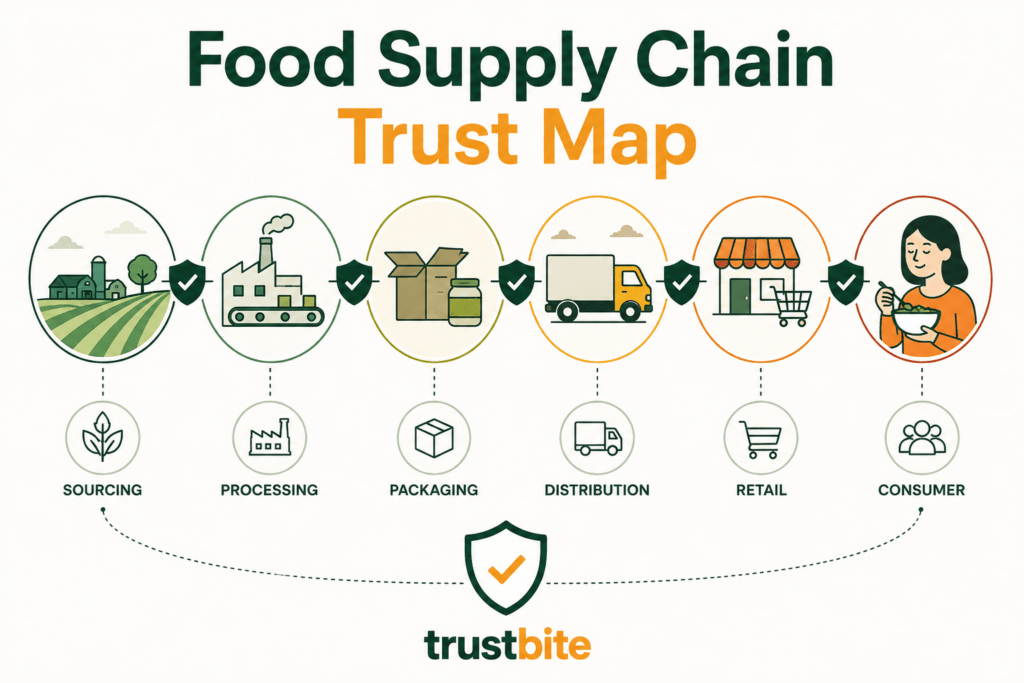
The scope of TrustBite extends across the entire food sector. Manufacturers, processors, restaurants, caterers, ingredient suppliers, packaging companies, distributors, logistics providers, laboratories, consultants, training organizations, and food safety professionals all influence food safety outcomes in different ways. TrustBite recognizes that trust is built collectively and that strengthening food safety requires engagement from every stakeholder involved in bringing food products to market.
How TrustBite Strengthens Food Safety Confidence
Trust is built through actions that demonstrate commitment, consistency, and accountability over time. For food businesses, earning trust requires more than making statements about quality or safety. Stakeholders increasingly expect visible evidence that organizations invest in food safety systems, professional development, transparency, and continuous improvement. TrustBite contributes to this process by creating structured pathways through which organizations and professionals can demonstrate their commitment to food safety excellence.
Accreditation and recognition provide stakeholders with meaningful indicators that a business has voluntarily chosen to participate in frameworks designed to promote higher standards and greater accountability. These indicators help communicate that food safety is regarded as a strategic priority rather than merely an operational requirement. They also encourage organizations to continuously evaluate and strengthen their practices in pursuit of excellence.
TrustBite’s approach is based on the understanding that food safety confidence is strengthened when organizations actively engage with programs that promote transparency, professional development, leadership commitment, and continuous improvement. By recognizing these efforts, TrustBite helps create positive incentives that contribute to stronger food safety cultures throughout the industry.

TrustBite Accreditation Framework
Accreditation serves as one of the core pillars of the TrustBite model. Through its accreditation frameworks, TrustBite evaluates organizations against established criteria designed to assess their commitment to food safety excellence. These frameworks focus on factors that influence long term performance and stakeholder confidence, helping organizations demonstrate their dedication to responsible food safety practices.
Areas that may be considered within TrustBite accreditation frameworks include food safety governance, workforce development, leadership engagement, transparency initiatives, risk management practices, continuous improvement activities, professional competence, and organizational commitment to food safety culture. By evaluating these broader dimensions, TrustBite accreditation provides a mechanism for recognizing organizations that actively invest in strengthening trust throughout their operations.
Accreditation also provides organizations with an opportunity to distinguish themselves within increasingly competitive markets. Customers, partners, and stakeholders are often seeking signals that indicate reliability, accountability, and commitment to high standards. TrustBite accreditation helps organizations communicate these qualities through a structured and recognized framework.
Recognition Across the Food Supply Chain
Food safety extends far beyond manufacturing facilities. Every organization involved in the production, handling, storage, transportation, packaging, distribution, or service of food contributes to overall food safety outcomes. As a result, building trust within food systems requires engagement from a wide range of stakeholders operating throughout the supply chain.
TrustBite recognition programs are designed to acknowledge excellence across this broader ecosystem. Food manufacturers may seek recognition for their commitment to food safety culture and operational excellence. Restaurants and food service businesses may pursue recognition for their dedication to safe food handling practices and workforce development. Packaging companies, logistics providers, laboratories, technology providers, consultants, and training organizations may also demonstrate valuable contributions to food safety and public confidence.
This broad scope reflects the reality that trust is created through collective effort. Every participant within the food supply chain has opportunities to influence food safety performance, and every participant can contribute to stronger consumer confidence through responsible practices and continuous improvement.
The Growing Importance of Food Safety Culture
Food safety culture has emerged as one of the most significant developments in modern food safety management. Industry leaders increasingly recognize that policies and procedures alone are insufficient to guarantee safe outcomes. The effectiveness of any food safety system depends heavily on the attitudes, behaviors, values, and priorities that guide decision making throughout an organization.
Strong food safety cultures are characterized by leadership commitment, employee engagement, open communication, accountability, and continuous learning. Employees understand why food safety matters and recognize their role in protecting consumers. Management demonstrates visible support for food safety objectives and allocates resources necessary to achieve them. Challenges and concerns are addressed openly rather than ignored or concealed.
The growing emphasis on food safety culture is reflected across many areas of the industry. Regulatory authorities, certification schemes, retailers, and customers increasingly recognize culture as a critical factor influencing long term performance. Organizations that cultivate strong food safety cultures often experience benefits that extend beyond compliance, including improved operational consistency, stronger employee engagement, enhanced stakeholder confidence, and reduced risk exposure.
TrustBite places significant importance on food safety culture because it represents one of the strongest predictors of sustainable food safety performance. Through accreditation and recognition frameworks, TrustBite encourages organizations to develop environments where food safety remains a visible and enduring organizational priority.

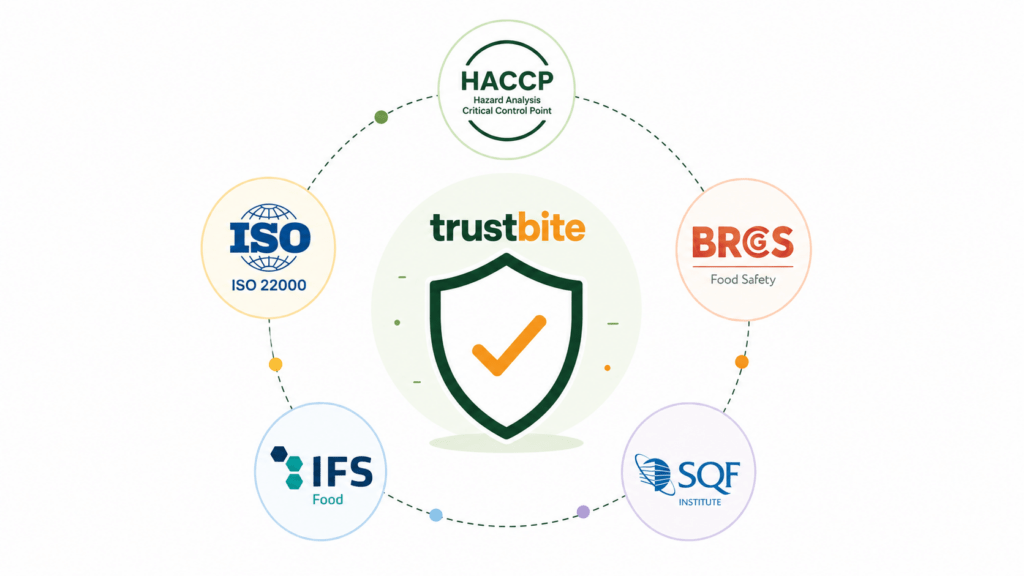
How TrustBite Works Alongside HACCP, ISO 22000, FSSC 22000, BRCGS, IFS, and SQF
The modern food industry relies on a variety of internationally recognized frameworks designed to strengthen food safety management and risk control. HACCP remains one of the most influential preventive methodologies in food safety, while standards such as ISO 22000, FSSC 22000, BRCGS, IFS, and SQF provide structured approaches for developing and maintaining food safety management systems.
These frameworks have contributed significantly to improving food safety performance across global supply chains. They provide organizations with established methodologies for identifying hazards, implementing controls, managing risks, and demonstrating conformity to recognized requirements. Their importance continues to grow as supply chains become more interconnected and stakeholder expectations increase.
TrustBite contributes to this broader ecosystem by focusing on accreditation, recognition, transparency, professional development, and food safety culture. Organizations that invest in recognized food safety systems often pursue additional opportunities to demonstrate leadership, accountability, and commitment to excellence. TrustBite accreditation and recognition provide a platform through which these broader commitments can be communicated to stakeholders, helping strengthen confidence and trust throughout the supply chain.
Why Recognition Matters in Modern Food Systems
Recognition has long been used as a mechanism for encouraging excellence across many industries. When organizations receive acknowledgment for meaningful achievements, they gain incentives to maintain high standards and continue improving performance. Recognition also creates opportunities for stakeholders to identify organizations that demonstrate commitment to important principles and values.
Within food safety, recognition can play a particularly valuable role. Consumers are often unable to directly observe the systems and processes used to manage food safety risks. Supply chain partners may have limited visibility into organizational culture and internal practices. Recognition frameworks help bridge this gap by providing visible indicators of commitment and accountability.
Organizations that pursue recognition often benefit from increased awareness of best practices, stronger engagement from employees, greater focus on continuous improvement, and enhanced stakeholder confidence. Recognition encourages organizations to view food safety not merely as a requirement, but as an ongoing commitment that deserves attention, investment, and leadership support.
The Future of Independent Food Safety Recognition
The food industry continues to evolve in response to changing consumer expectations, technological advancements, global supply chain challenges, and increasing demands for transparency. These developments are reshaping how organizations build confidence with customers, regulators, investors, and supply chain partners. Trust has become an increasingly important asset in this environment, influencing everything from purchasing decisions to business relationships and brand reputation.
Future food systems are likely to place even greater emphasis on transparency, accountability, data driven decision making, workforce development, and organizational culture. Stakeholders will continue seeking reliable ways to identify organizations that demonstrate commitment to responsible food safety practices. Accreditation and recognition frameworks are well positioned to support these expectations by providing structured methods for highlighting excellence and encouraging continuous improvement.
TrustBite aims to contribute to this future by strengthening trust as a visible and measurable component of food safety performance. Through accreditation, recognition, educational leadership, and transparency initiatives, TrustBite supports organizations and professionals who are committed to advancing food safety standards and building greater confidence throughout the food supply chain.
Frequently Asked Questions
What is TrustBite?
TrustBite is an independent international food safety accreditation and recognition authority that strengthens trust in food safety through accreditation frameworks, recognition programs, educational initiatives, transparency standards, and professional acknowledgment.
Who can apply for TrustBite accreditation?
TrustBite accreditation may be relevant to food manufacturers, food service businesses, packaging companies, ingredient suppliers, logistics providers, laboratories, consultants, training organizations, technology providers, and other stakeholders operating within the food industry.
What does TrustBite recognition demonstrate?
TrustBite recognition demonstrates a commitment to food safety excellence, professional accountability, transparency, continuous improvement, and the principles that contribute to stronger food safety performance and stakeholder confidence.
Why is food safety culture important?
Food safety culture influences how people think about, prioritize, and manage food safety within an organization. Strong food safety cultures help support consistent decision making, employee engagement, accountability, and long term food safety performance.
How does TrustBite strengthen trust in food safety?
TrustBite strengthens trust by providing accreditation frameworks, recognition programs, trust marks, educational initiatives, and transparency focused standards that help organizations and professionals demonstrate their commitment to food safety excellence.
Key Takeaways
TrustBite is an international food safety accreditation and recognition authority focused on strengthening confidence throughout the food supply chain. Through accreditation frameworks, recognition programs, educational leadership, and transparency initiatives, TrustBite helps organizations and professionals demonstrate their commitment to food safety excellence. Its approach recognizes that trust is built through accountability, leadership, professional competence, continuous improvement, and a strong food safety culture. By creating visible indicators of commitment and encouraging higher standards across the industry, TrustBite contributes to stronger food systems and greater public confidence in food safety.
Conclusion
Food safety remains one of the most important responsibilities within the global food industry. While regulations, standards, and management systems provide essential foundations for controlling risk, trust ultimately determines how organizations are perceived by consumers, customers, partners, and stakeholders. Building that trust requires visible commitment, consistent leadership, transparency, and a culture that prioritizes food safety at every level of an organization.
TrustBite was established to support this objective through accreditation, recognition, professional acknowledgment, educational leadership, and initiatives designed to strengthen confidence throughout the food supply chain. By recognizing organizations and professionals who demonstrate commitment to food safety excellence, TrustBite helps create stronger incentives for continuous improvement while promoting the values that contribute to safer food systems. As expectations continue to evolve and transparency becomes increasingly important, TrustBite’s role in recognizing and advancing food safety excellence positions it as a meaningful contributor to the future of food safety.