What Is HACCP?
Food businesses today operate in an environment where safety, consistency, and compliance are more important than ever. Whether you run a restaurant, manufacture food products, package ingredients, or distribute goods across multiple locations, customers and regulators expect food to be safe every time.
Meeting that expectation requires more than good intentions. It requires a structured system that identifies risks before they become problems. This is where HACCP comes in.
HACCP is one of the most widely used food safety systems in the world. It helps businesses prevent food safety hazards by focusing on risk identification, control, monitoring, and continuous improvement. Instead of waiting for issues to occur, HACCP takes a preventive approach to food safety management.
In this guide, we will explain what HACCP is, why it was created, how it works, and how businesses use it to reduce food safety risks throughout the food supply chain.
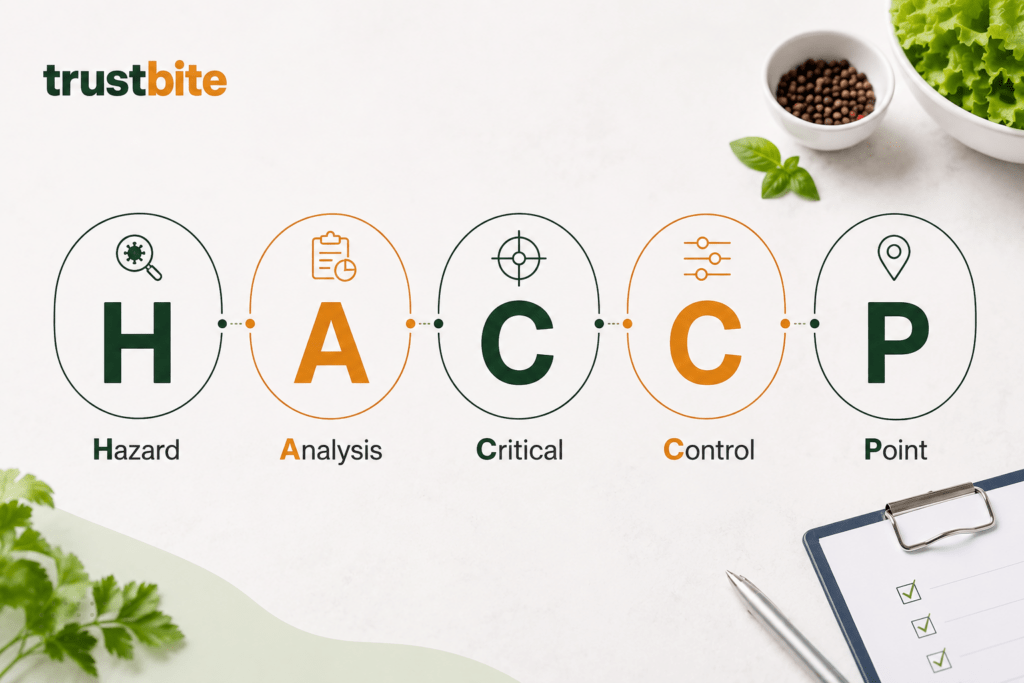
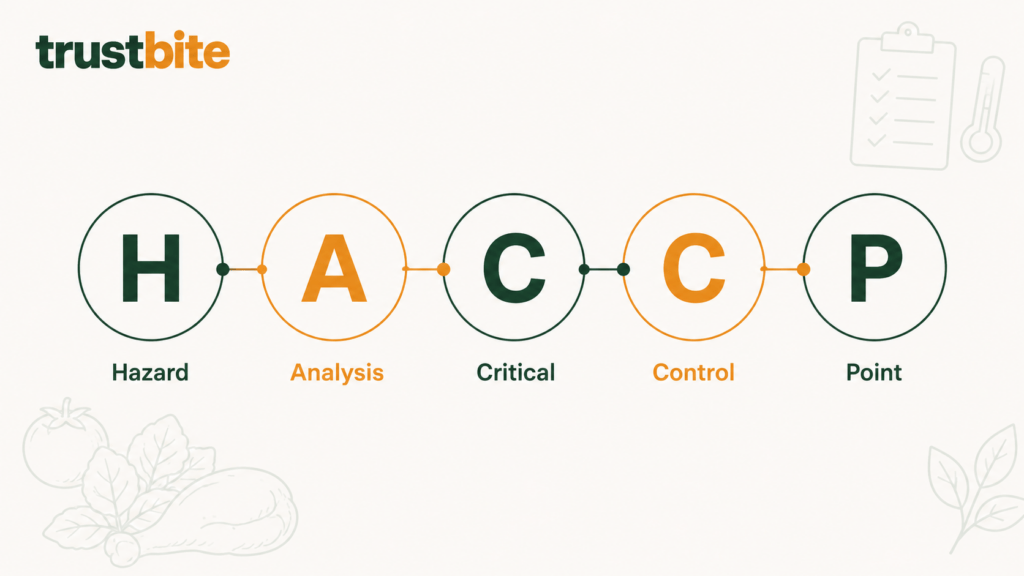
HACCP stands for Hazard Analysis and Critical Control Points. It is a preventive food safety system designed to identify, evaluate, and control hazards that could make food unsafe. Rather than relying solely on final product testing, HACCP focuses on controlling risks during production, preparation, storage, packaging, and distribution.
The goal is straightforward. Identify potential hazards before they cause problems and put effective controls in place to prevent them.
Today, HACCP forms the foundation of many food safety management systems and is recognized globally by regulators, certification schemes, food manufacturers, restaurants, and food industry professionals.
Why Was HACCP Created?
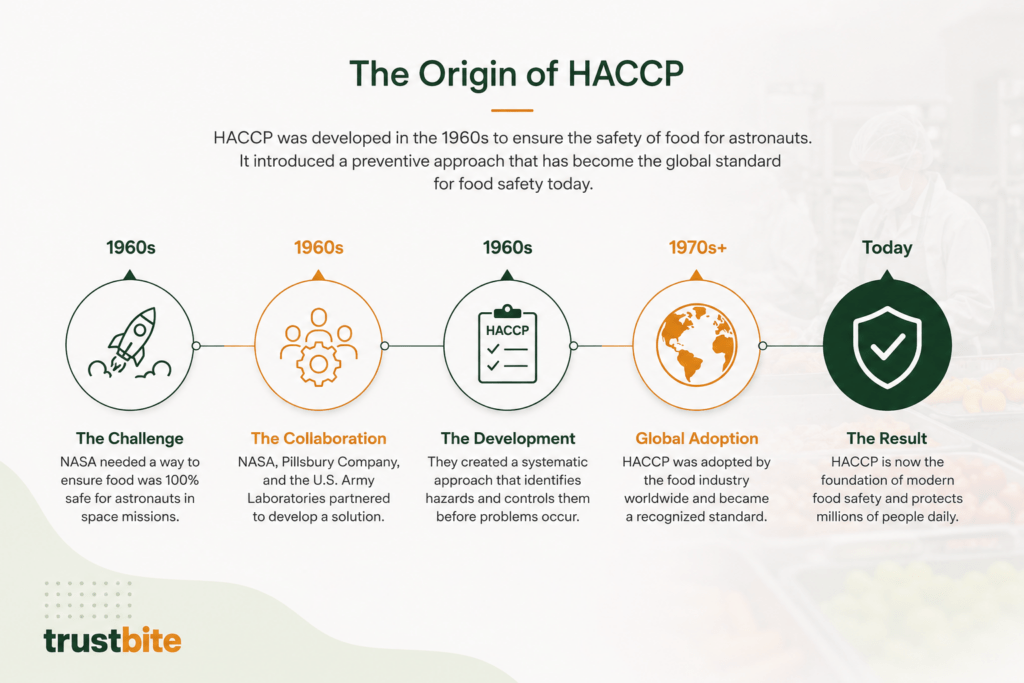
HACCP was originally developed during the 1960s through a collaboration between NASA, the Pillsbury Company, and the U.S. Army Laboratories. The challenge was unique. Astronauts needed food that was extremely safe because even a minor foodborne illness could create serious problems during a space mission.
Traditional product testing alone was not enough. Food safety needed to be built directly into the production process. This led to the development of a preventive system that focused on identifying hazards before they could affect the final product.
Over time, HACCP evolved beyond the aerospace industry and became the global benchmark for preventive food safety. Today, it is used throughout the food supply chain and forms the basis of many national food safety regulations and international standards.
Why Is HACCP Important?
Food can become contaminated at many different stages. Raw materials may contain biological hazards. Equipment can introduce physical contamination. Incorrect storage temperatures may allow harmful microorganisms to grow. Human error can also create food safety risks.
Without a structured food safety system, these hazards can be difficult to manage consistently.
HACCP helps businesses identify food safety risks, establish effective controls, maintain compliance, and reduce the likelihood of food contamination. Most importantly, it shifts food safety from a reactive approach to a preventive one.
Instead of asking, “What went wrong?” after an incident occurs, HACCP asks, “What could go wrong, and how can we prevent it?”
How HACCP Prevents Food Safety Risks
The strength of HACCP lies in its focus on prevention. Every process step is evaluated to determine what hazards may exist and what controls are necessary to keep those hazards under control.
For example, a restaurant preparing chicken must ensure that cooking temperatures are high enough to destroy harmful bacteria. Rather than relying on random product testing, HACCP establishes specific cooking requirements, monitoring procedures, and corrective actions if temperatures are not achieved.
This preventive approach allows businesses to control risks before food reaches consumers. It also creates consistency across operations, making food safety part of everyday decision-making rather than an occasional compliance exercise.
Where Is HACCP Used?
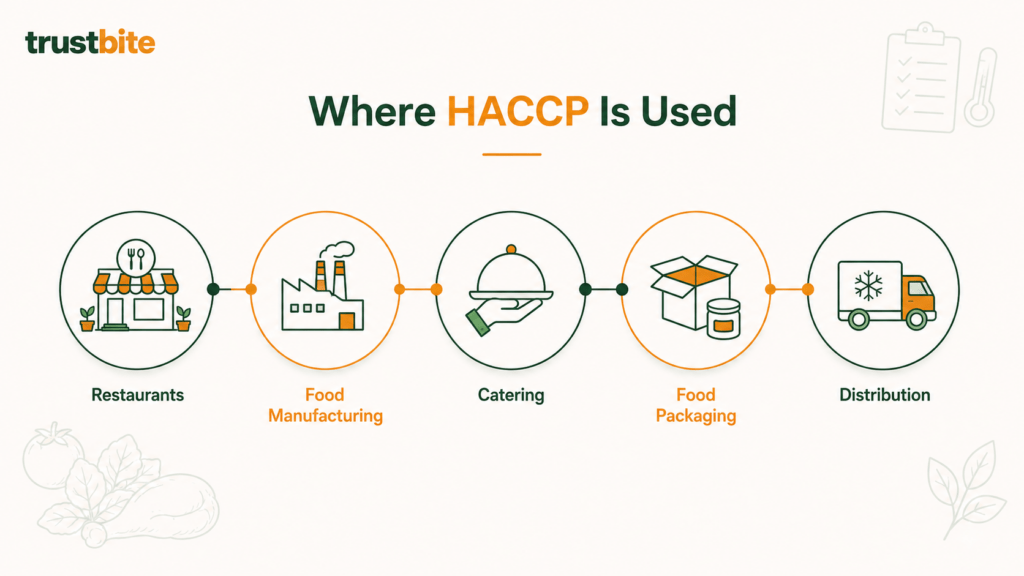
HACCP is used across virtually every sector of the food industry because food safety hazards can occur at any stage of the supply chain.
Restaurants use HACCP to control cooking temperatures, prevent cross-contamination, manage cold storage, and ensure proper cleaning practices.
Food manufacturers apply HACCP to ingredient handling, processing activities, allergen management, packaging operations, and finished product controls.
Catering businesses use HACCP to manage food preparation, transportation, hot holding, cold holding, and service activities.
Food packaging facilities implement HACCP to prevent contamination during packing, storage, and labeling operations.
Warehouses and distribution companies use HACCP to monitor storage conditions, maintain cold chains, manage stock rotation, and ensure product traceability.
Although operations differ, the objective remains the same: producing and delivering safe food consistently.
Understanding Hazard Analysis
Hazard analysis is the foundation of HACCP. Before hazards can be controlled, they must first be identified and evaluated.
A hazard is anything that could make food unsafe for consumption. HACCP generally divides hazards into three categories: biological, chemical, and physical.
Biological hazards include bacteria, viruses, molds, and parasites. Common examples include Salmonella, Listeria, and E. coli.
Chemical hazards include substances that may contaminate food and cause harm. Examples include cleaning chemicals, pesticide residues, lubricants, and allergens.
Physical hazards are foreign objects that may enter food during production or handling. Examples include metal fragments, glass pieces, plastic fragments, and stones.
During hazard analysis, businesses review every process step and determine where these hazards could occur, how significant they are, and what controls are needed to manage them effectively.
What Are Critical Control Points?
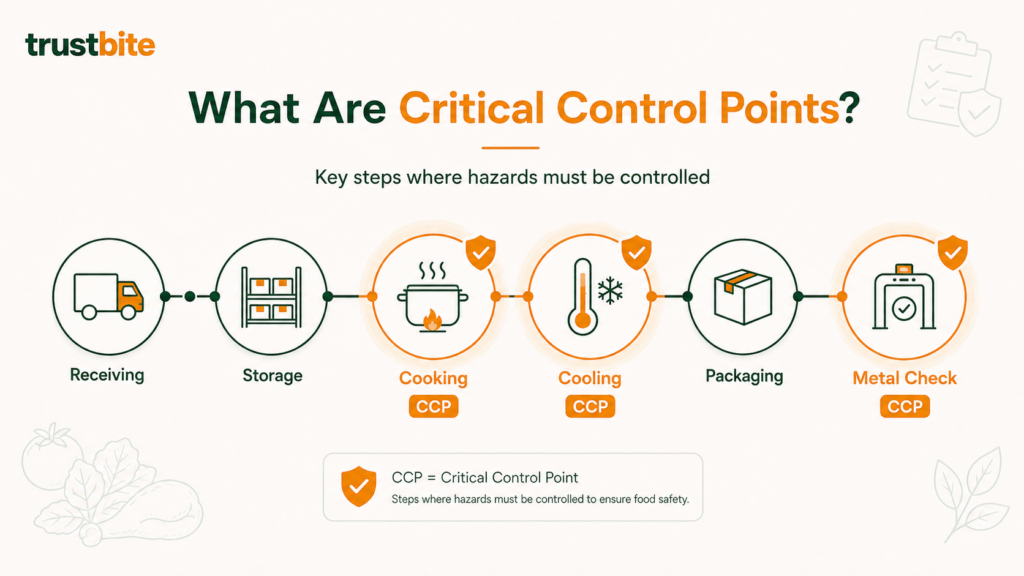
A Critical Control Point, commonly known as a CCP, is a step where control is essential to prevent, eliminate, or reduce a food safety hazard to an acceptable level.
Not every step in a process becomes a CCP. Critical Control Points are reserved for activities that have a direct impact on food safety.
Examples include cooking chicken to a safe internal temperature, pasteurizing milk, cooling cooked products within a specified timeframe, or using metal detectors before packaging.
Because failure at a CCP may directly compromise food safety, these points require strict monitoring and clearly defined limits.
The 7 HACCP Principles Explained
The HACCP system is built around seven internationally recognized principles that provide a structured framework for food safety management.
Principle 1: Conduct a Hazard Analysis
The first step is identifying potential biological, chemical, and physical hazards associated with each stage of the process. Businesses assess the likelihood and severity of each hazard and determine how those hazards can be controlled.
Principle 2: Determine Critical Control Points
After hazards are identified, businesses determine which process steps require strict control to prevent or eliminate significant food safety risks. These become the Critical Control Points within the food safety plan.
Principle 3: Establish Critical Limits
Each CCP must have measurable limits that define safe operation. These may include minimum cooking temperatures, maximum storage temperatures, processing times, water activity levels, or pH values.
Critical limits provide a clear boundary between safe and potentially unsafe conditions.
Principle 4: Establish Monitoring Procedures
Monitoring ensures that critical limits are consistently achieved. This may involve temperature checks, visual inspections, equipment readings, or time measurements.
Regular monitoring allows problems to be detected before they affect food safety.
Principle 5: Establish Corrective Actions
Corrective actions define what happens when monitoring identifies a deviation from a critical limit. Examples include reheating food, adjusting equipment settings, holding affected products, or disposing of unsafe products.
A good corrective action process not only addresses the immediate issue but also helps prevent recurrence.
Principle 6: Establish Verification Procedures
Verification confirms that the HACCP system is functioning as intended. Activities may include internal audits, record reviews, calibration checks, product testing, and HACCP plan assessments.
Verification provides confidence that controls remain effective over time.
Principle 7: Establish Documentation and Record Keeping
Documentation demonstrates that food safety procedures are being followed. Typical records include monitoring logs, corrective action reports, verification records, calibration records, and employee training documentation.
Good record keeping supports compliance, accountability, and continuous improvement.
Monitoring: The Daily Control Mechanism
Monitoring is one of the most visible parts of HACCP because it occurs during everyday operations. Without monitoring, businesses have no reliable way of knowing whether critical controls are functioning properly.
Consider a refrigerated storage area with a maximum temperature requirement. Employees perform temperature checks at scheduled intervals and record the results. If temperatures exceed acceptable limits, corrective actions can be taken immediately before product safety is affected.
Monitoring transforms food safety requirements into practical, measurable activities that employees perform every day.
Corrective Actions: Responding to Problems
Even well-managed operations occasionally experience deviations. Equipment can malfunction, deliveries may arrive outside temperature specifications, or procedures may not be followed correctly.
Corrective actions provide a structured response when these situations occur. An effective corrective action process answers four key questions:
- What happened?
- What product was affected?
- What action was taken immediately?
- How will recurrence be prevented?
By following a documented process, businesses can protect food safety while also identifying opportunities for improvement.
Why Documentation Matters
Documentation is sometimes viewed as administrative work, but it plays a critical role in HACCP implementation. Records provide evidence that food safety controls were carried out as planned.
If a food safety issue occurs, documentation helps businesses investigate root causes and determine whether controls were functioning correctly. During inspections, audits, and certification assessments, records demonstrate compliance and operational discipline.
Well-designed documentation systems should be accurate, practical, and easy for employees to use consistently.
Verification Keeps HACCP Effective
A HACCP plan should never remain unchanged indefinitely. Processes evolve, products change, equipment is upgraded, and new risks may emerge.
Verification activities help ensure that the system remains effective and relevant. This may include reviewing monitoring records, conducting internal audits, evaluating corrective actions, validating control measures, and assessing employee performance.
Regular verification helps organizations identify weaknesses early and maintain confidence in their food safety controls.
The Importance of Employee Training
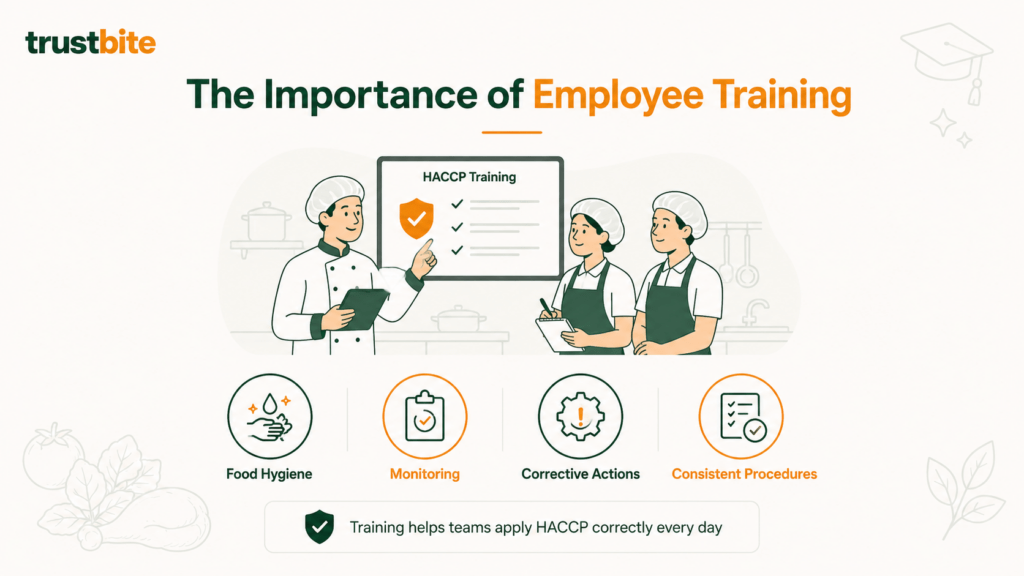
Even the most detailed HACCP plan depends on the people responsible for implementing it. Employees perform monitoring activities, complete records, follow procedures, and carry out corrective actions when necessary.
Without proper training, food safety controls may be applied inconsistently.
Training should cover basic food hygiene practices, HACCP principles, workplace procedures, monitoring requirements, and employee responsibilities. When workers understand both the procedures and the reasons behind them, compliance becomes far more consistent.
Strong food safety systems are built on both effective processes and knowledgeable people.
Digital HACCP Systems and Modern Food Safety Management
Many businesses still rely on paper records and spreadsheets to manage food safety activities. While these methods can be effective, digital food safety systems often improve consistency, visibility, and efficiency.
Digital platforms can simplify monitoring, documentation, employee training, corrective action management, internal audits, and document control. They also make it easier for managers to identify trends and respond quickly to potential issues.
Training platforms provide another important advantage by ensuring employees receive consistent food safety education regardless of location or experience level.
Solutions such as Confi Food help organizations strengthen workforce understanding, improve procedural consistency, and support HACCP implementation through structured training and digital food safety management tools. Technology does not replace HACCP principles. Instead, it helps businesses apply them more effectively.
Conclusion
HACCP is far more than a regulatory requirement. It is a practical framework for preventing food safety problems before they occur.
By focusing on hazard analysis, critical control points, monitoring, corrective actions, verification, documentation, and employee training, HACCP helps businesses establish control over the factors that influence food safety every day.
Whether you operate a restaurant, food manufacturing facility, catering company, packaging operation, or distribution center, HACCP provides a structured approach to managing risk and maintaining consistency.
Safe food is rarely the result of luck. It is the result of well-designed processes, trained employees, and preventive controls. HACCP brings all of these elements together into a system that helps businesses protect consumers, maintain compliance, and operate with confidence.
Frequently Asked Questions
What is HACCP in simple terms?
HACCP is a preventive food safety system that helps food businesses identify possible hazards and control them before they make food unsafe. It is used to reduce the risk of food contamination and support safer food production, preparation, storage, packaging, and distribution.
What does HACCP stand for?
HACCP stands for Hazard Analysis and Critical Control Points. “Hazard Analysis” means identifying food safety risks. “Critical Control Points” are the key steps where those risks must be controlled to keep food safe.
What is the main purpose of HACCP?
The main purpose of HACCP is to prevent food safety problems before they happen. Instead of relying only on final product checks, HACCP focuses on controlling hazards throughout the food process.
Why is HACCP important for food businesses?
HACCP is important because it helps food businesses manage food safety risks in a structured and consistent way. It supports food safety compliance, reduces the chance of food contamination, and helps protect consumers from foodborne illness.
What are the 7 HACCP principles?
The 7 HACCP principles are:
- Conduct a hazard analysis
- Determine Critical Control Points
- Establish critical limits
- Establish monitoring procedures
- Establish corrective actions
- Establish verification procedures
- Establish documentation and record keeping
Together, these principles create a practical food safety plan based on prevention and control.
What is hazard analysis in HACCP?
Hazard analysis is the process of identifying biological, chemical, and physical hazards that may occur during food production, handling, storage, or distribution. It helps businesses understand what could go wrong and what controls are needed to prevent food safety risks.
What are Critical Control Points in HACCP?
Critical Control Points, often called CCPs, are process steps where control is essential to prevent, eliminate, or reduce a significant food safety hazard. Examples may include cooking, cooling, pasteurization, or metal detection, depending on the food process.
What is an example of a Critical Control Point?
A common example of a Critical Control Point is cooking poultry to a safe internal temperature. If the food is not cooked properly, harmful bacteria may survive. Monitoring the cooking temperature helps confirm that the hazard is controlled.
How does HACCP help prevent foodborne illness?
HACCP helps prevent foodborne illness by identifying hazards early and placing controls at key points in the food process. This reduces the chance that contaminated or unsafe food reaches consumers.
Who needs HACCP?
HACCP is used by restaurants, food manufacturers, catering companies, food packaging businesses, warehouses, distributors, and many other food businesses. Any operation that handles food can benefit from HACCP or HACCP-based food safety management.
Is HACCP required by law?
HACCP requirements depend on the country, food sector, and type of business. In many places, food businesses are required to follow HACCP principles or implement a HACCP-based food safety system as part of food safety compliance.
Is HACCP the same as a food safety plan?
HACCP is a major part of a food safety plan, but the full food safety plan may also include hygiene procedures, cleaning schedules, supplier controls, allergen management, traceability, staff training, and other operational requirements.
What is the difference between HACCP and food hygiene?
Food hygiene focuses on practices such as handwashing, cleaning, sanitation, personal hygiene, and safe food handling. HACCP is a wider preventive system that identifies hazards and controls food safety risks across the whole process. Food hygiene often supports the HACCP system.
Why is monitoring important in HACCP?
Monitoring confirms that critical controls are working as intended. For example, checking cooking temperatures, refrigeration temperatures, or metal detector performance helps a business know whether the process is still under control.
What happens if a critical limit is not met?
If a critical limit is not met, the business must take corrective action. This may include holding the product, reheating it, adjusting equipment, rejecting a delivery, disposing of unsafe food, or investigating why the problem happened.
Why is documentation important in HACCP?
Documentation provides evidence that food safety controls were followed. HACCP records help during inspections, audits, investigations, training reviews, and continuous improvement. Good records also help managers identify repeated issues and improve operations.
Why is employee training important for HACCP?
Employee training is important because HACCP only works when people understand and follow the procedures correctly. Trained employees are more likely to monitor controls properly, complete records accurately, and respond correctly when something goes wrong.
Can digital systems improve HACCP?
Yes. Digital food safety systems can improve HACCP consistency by making monitoring, documentation, corrective actions, training, and verification easier to manage. They do not replace HACCP principles, but they can help teams apply them more reliably.
Where can someone get more information or training about HACCP?
Someone who wants to learn HACCP can start with practical food safety training that explains the principles, examples, and daily responsibilities in a simple way. Confi Food offers HACCP and food safety courses designed to help food handlers, managers, and food businesses understand how HACCP works and how to apply it correctly in real operations.