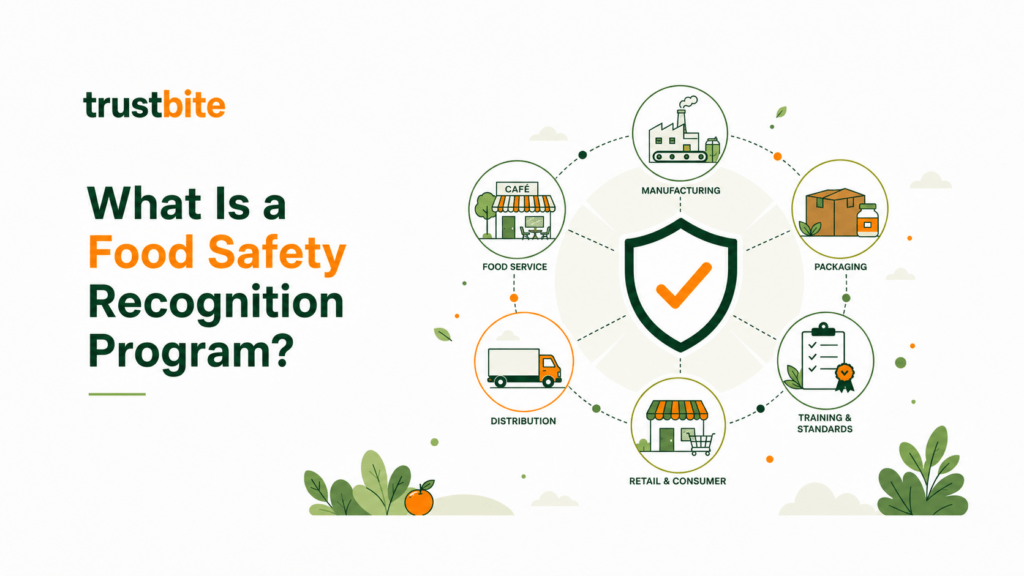
A food safety recognition program is a voluntary food safety program that identifies and recognizes businesses, professionals, or organizations that meet defined criteria connected to food safety responsibility, transparency, education, culture, or trust-building practices.
The specific structure of a recognition program may vary. Some programs focus on restaurants and hospitality businesses. Others may recognize food manufacturers, catering companies, food safety consultants, trainers, technology providers, or supply chain partners. Some may use public registries, trust marks, recognition badges, or recognition levels to communicate participation.
At its core, a food safety recognition program usually includes three essential elements:
- Defined recognition criteria
- Evidence or evaluation against those criteria
- Public communication of the recognition status
The criteria may include:
- Documented food safety procedures
- Staff training
- Allergen awareness
- Hygiene practices
- Management commitment
- Incident response readiness
- Transparency practices
- Use of qualified food safety support
A food safety recognition program is not the same as food safety certification. Certification normally verifies conformity to a formal standard through an audit process conducted by a competent certification body. Recognition, by contrast, is generally focused on public trust, transparency, culture, education, and visible commitment.
This distinction matters. A food safety recognition program should not claim that a business is “guaranteed safe” or that it no longer needs inspections, audits, HACCP systems, legal compliance, or certification. Food safety recognition is best understood as a complementary trust-building framework.
Why Do Food Safety Recognition Programs Exist?
Food safety recognition programs exist because there is often a gap between legal compliance and public trust.
A food business may have good hygiene procedures, trained staff, documented controls, allergen procedures, traceability systems, supplier checks, and a serious management commitment to food safety. However, most consumers never see those systems. They see the dining area, the packaging, the website, the staff, the reviews, and the brand reputation.
In many cases, the public has limited visibility into what happens behind the scenes.
Consumers usually do not see:
- Whether staff receive regular food safety training
- Whether allergen risks are taken seriously
- Whether cleaning and sanitation are documented
- Whether management reviews food safety performance
- Whether suppliers are checked
- Whether complaints and incidents are investigated
- Whether corrective actions are taken
- Whether a business has invested in expert food safety support
This lack of visibility creates a communication challenge. Food safety compliance may exist internally, but public trust depends on whether responsibility can be communicated clearly, credibly, and without misleading claims.
A food safety recognition program can help make responsible practices more visible. It does not replace inspections or audits, but it can help translate internal responsibility into public-facing trust signals.
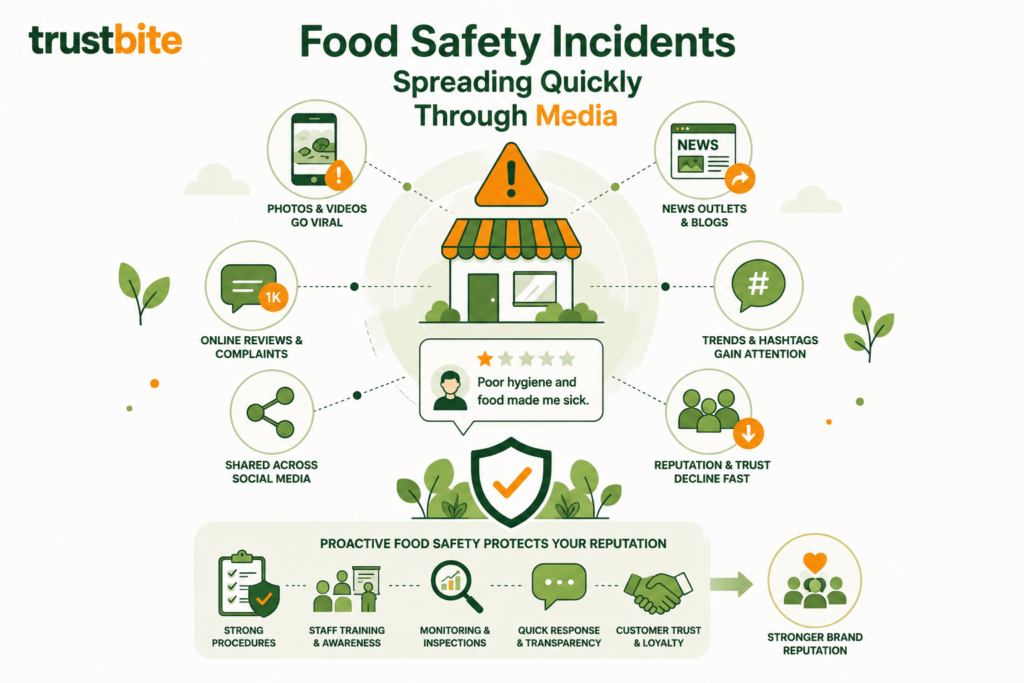
This is especially important in sectors where reputation is fragile. A single food safety complaint, online review, allergen incident, hygiene concern, or viral social media post can quickly damage consumer trust in food businesses. Recognition programs can support a more proactive approach by encouraging transparency, education, and accountability before problems occur.
Recognition vs Certification vs Regulation
Food safety recognition, food safety certification, and regulatory inspection are often confused, but they serve different purposes.
Regulatory inspection is part of the official legal control system. It is usually carried out by government or competent authorities to verify whether a food business complies with applicable food safety laws.
Food safety certification is a formal process where a business is assessed against a specific standard, such as ISO 22000, BRCGS, FSSC 22000, IFS, SQF, or another recognized scheme. Certification is typically conducted by accredited or approved certification bodies and may be required by customers, retailers, supply chain partners, or export markets.
Food safety recognition is different. It is usually voluntary and focuses on highlighting commitment, transparency, trust signals, education, culture, or responsible practices. A food safety trust mark or recognition status may help a business communicate its food safety values to the public, but it should not be presented as a replacement for inspection or certification.
The key point is simple: recognition complements regulation and certification. It should never be used to suggest that a business is exempt from legal duties or formal food safety requirements.
| Category | Regulatory Inspection | Food Safety Certification | Food Safety Recognition |
|---|---|---|---|
| Purpose | To verify compliance with food safety laws and regulatory requirements. | To verify conformity with a specific food safety standard or certification scheme. | To recognize visible commitment to responsible food safety practices, transparency, education, culture, or trust-building. |
| Legal status | Usually legally required for food businesses, depending on jurisdiction and activity. | Usually voluntary, but may be commercially required by customers, retailers, or supply chain partners. | Voluntary and normally not legally required. |
| Who performs it | Government authorities, competent inspection bodies, or official control agencies. | Certification bodies, auditors, or approved scheme partners. | Recognition authorities, independent program operators, professional organizations, or framework owners. |
| Main focus | Legal compliance, public health protection, enforcement, and corrective action. | Conformity to defined standards, management systems, audit evidence, and certification requirements. | Trust-building, transparency, culture, education, responsible practices, and public communication. |
| Public communication | May be public or limited depending on local rules, inspection grading systems, or official registers. | Certification status may be communicated publicly, often for B2B credibility and supply chain assurance. | Often designed for public communication through trust marks, registries, badges, profiles, or recognition listings. |
| Examples | Hygiene inspections, official food control inspections, enforcement visits, licensing checks. | ISO 22000, FSSC 22000, BRCGS, IFS, SQF, HACCP-based third-party audits. | Food safety recognition program, food safety trust mark, transparency registry, professional recognition framework. |
| Limitations | Inspections may occur periodically and may not communicate all responsible practices to consumers. | Certification can be technical and may not be easily understood by consumers. | Recognition does not replace legal compliance, certification, inspections, or formal verification of a full standard. |
How a Food Safety Recognition Program Works
Every food safety recognition program may operate differently, depending on its purpose, scope, criteria, and governance model. However, many programs follow a similar general process.
1. Defined recognition criteria
A credible food safety recognition framework should begin with clear criteria. These criteria explain what a business, professional, or organization must demonstrate to be recognized.
Criteria may cover:
- Food safety procedures
- Staff training
- Hygiene practices
- Allergen awareness
- Transparency
- Management commitment
- Incident response readiness
- Other responsible practices
The more clearly the criteria are defined, the easier it is for participants and the public to understand what recognition means.
2. Application or evaluation
A food business or professional may apply for recognition or be invited to participate. The application usually collects information about the organization, its activities, food safety practices, training systems, and evidence of responsibility.
In some programs, the evaluation may be desk-based. In others, it may include:
- Interviews
- Document checks
- Self-assessments
- Third-party evidence
- Additional review steps
3. Review of documentation or evidence
Recognition programs often require some form of evidence. This may include:
- Food safety procedures
- Training records
- Cleaning schedules
- Allergen controls
- Supplier information
- Incident response procedures
- Internal audit records
- Proof of professional qualifications
The purpose is not necessarily to conduct a full certification audit, but to determine whether the participant meets the recognition criteria.
4. Assessment of training, hygiene, transparency, or management commitment
A food safety recognition program may assess whether the business demonstrates a serious commitment to food safety culture. This can include staff awareness, leadership involvement, communication practices, and willingness to be publicly accountable.
Food safety culture is important because written procedures alone are not enough. A business also needs people who understand, follow, and support those procedures in daily work.
5. Recognition decision
After the review, the recognition program decides whether the applicant meets the criteria.
Some frameworks may use:
- A simple recognized/not recognized result
- Recognition levels
- Categories
- Badges
- Scopes
- Specialized recognition types
The decision should be based on defined criteria and should avoid vague or exaggerated claims.
6. Public listing or registry
Many recognition programs include a public registry, listing, profile, or trust mark. This allows consumers, partners, or stakeholders to verify that the business is part of the program.
A public registry can support food safety transparency because it gives recognition a visible and verifiable form.
7. Ongoing renewal or monitoring
Food safety is not a one-time activity. Procedures, staff, suppliers, menus, products, equipment, and risks can change.
For this reason, many recognition programs include:
- Renewal periods
- Periodic updates
- Evidence reviews
- Ongoing monitoring
- Removal or suspension rules if criteria are no longer met
Renewal helps keep recognition current and reduces the risk of outdated trust signals remaining in public use.
What Criteria Can Be Included in a Recognition Program?
A food safety recognition program can include different criteria depending on its goals. Some programs may focus on consumer-facing hospitality businesses, while others may focus on manufacturing, training, professional competence, technology, or supply chain transparency.
Common criteria may include the following.
Documented food safety procedures
A recognized business may be expected to have documented food safety procedures appropriate to its activities.
These may include procedures for:
- Receiving
- Storage
- Preparation
- Cooking
- Cooling
- Cleaning
- Allergen handling
- Personal hygiene
- Pest prevention
- Incident response
Documentation does not need to be unnecessarily complex, but it should be practical, accessible, and relevant to the business.
Staff training
Training is one of the most important elements of a responsible food safety system. Recognition criteria may consider whether staff receive appropriate food safety training for their role, whether training is documented, and whether refresher training is provided when needed.
Training may cover:
- Personal hygiene
- Cross-contamination
- Allergens
- Temperature control
- Cleaning
- Reporting issues
- Safe handling practices
Hygiene practices
Hygiene is a visible and practical foundation of food safety. Recognition criteria may include:
- Handwashing practices
- Protective clothing
- Cleaning routines
- Equipment hygiene
- Waste management
- Pest prevention
- Facility cleanliness
For hospitality businesses, hygiene practices are often one of the most direct signals of food business trust.
Management commitment
Food safety culture starts with leadership. A recognition program may consider whether management:
- Supports food safety
- Allocates resources
- Reviews performance
- Responds to incidents
- Communicates expectations clearly
- Treats food safety as a business priority rather than a paperwork exercise
Management commitment is especially important because staff behavior is influenced by what leaders reward, tolerate, monitor, and correct.
Traceability awareness
Traceability helps businesses respond to product issues, complaints, recalls, and supplier problems. Recognition criteria may include awareness of:
- Supplier records
- Batch information
- Product identification
- Recall readiness
- Withdrawal procedures
- Internal traceability responsibilities
A recognition program may not conduct a full traceability audit, but it can encourage businesses to understand and maintain responsible traceability practices.
Allergen awareness
Allergen control is a major area of consumer risk and public concern. Recognition criteria may include:
- Allergen information management
- Staff awareness
- Menu or label accuracy
- Cross-contact prevention
- Communication with customers
- Procedures for handling allergen questions or incidents
For restaurants, cafes, bakeries, caterers, and food manufacturers, allergen awareness can be a critical trust factor.
Cleaning and sanitation practices
Cleaning and sanitation are central to preventing contamination. Recognition criteria may consider whether:
- Cleaning procedures are documented
- Cleaning responsibilities are assigned
- Chemicals are used correctly
- Cleaning tools are suitable and maintained
- Cleaning records are maintained where appropriate
- Corrective action is taken when cleaning issues are identified
Effective sanitation practices support both compliance and consumer confidence.
Incident response readiness
No food business can honestly claim that incidents are impossible. Responsible businesses prepare for problems before they occur.
Recognition criteria may include:
- Complaint handling
- Corrective action procedures
- Incident reporting
- Product withdrawal or recall awareness
- Internal escalation processes
- Communication responsibilities
- Review of root causes after incidents
This supports a realistic approach to food safety: prevention first, but readiness when something goes wrong.
Transparency practices
Food safety transparency means making responsible practices easier to understand and verify. This may include:
- Public recognition profiles
- Clear communication about training
- Visible hygiene commitments
- Allergen communication
- Participation in a public registry
- Clear explanation of what recognition does and does not mean
Transparency should be accurate and balanced. It should not mislead consumers into believing that recognition guarantees safety.
Public accountability
A recognition program may encourage businesses to be accountable for maintaining the practices they publicly communicate. This may include:
- Renewal requirements
- Evidence updates
- Complaint review processes
- Corrective action expectations
- Suspension or removal of recognition if criteria are no longer met
Public accountability is one of the most important differences between a meaningful food safety recognition framework and a simple marketing badge.
Use of verified consultants, trainers, or digital systems
Some programs may recognize the use of qualified consultants, professional trainers, documented digital systems, monitoring tools, or technology platforms that support responsible food safety practices.
These may include:
- Verified food safety consultants
- Professional training providers
- Digital HACCP or compliance systems
- Temperature monitoring tools
- Training record platforms
- Traceability tools
- Cleaning verification systems
However, technology or expert support should be presented as supportive evidence, not as a guarantee of safety.
Who Can Be Recognized?
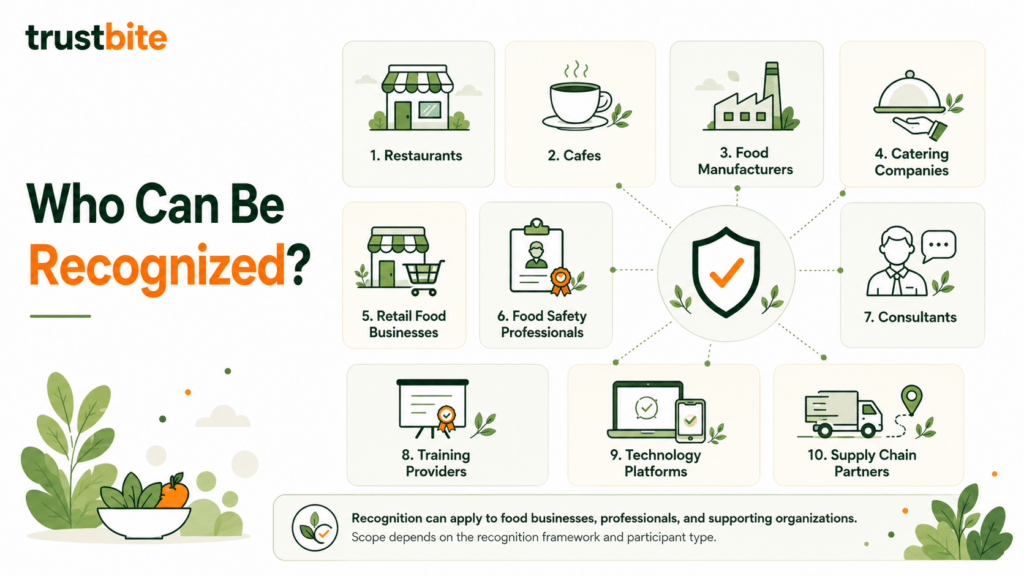
Food safety recognition programs can be designed for many different types of participants across the food sector.
Depending on the scope of the program, recognition may apply to:
- Restaurants
- Cafes
- Hotels and hospitality operators
- Food manufacturers
- Bakeries
- Catering companies
- Food retailers
- Meal delivery businesses
- Food safety professionals
- Food safety consultants
- Training providers
- Technology platforms
- Cleaning and hygiene solution providers
- Supply chain partners
- Warehouses and distributors
- Importers and exporters
Some recognition programs may be limited to food businesses that directly serve consumers. Others may include professionals, consultants, trainers, or service providers who support food safety standards across the industry.
The important point is that recognition criteria should match the participant type. A restaurant, a food factory, a consultant, and a training provider do not all present the same risks or responsibilities. A credible food safety recognition program should define scope clearly so the public understands what is being recognized.
Benefits for Food Businesses
A food safety recognition program can offer several potential benefits for food businesses when used responsibly and transparently.
Stronger consumer confidence
Recognition can help consumers see that a business is publicly committed to responsible food safety practices. This may support consumer trust in food businesses, especially when the recognition is connected to clear criteria and a public registry.
It should not be presented as proof that risk has been eliminated. Instead, it should communicate commitment, responsibility, and transparency.
Better reputation
Food businesses operate in a reputation-sensitive environment. Online reviews, social media comments, customer complaints, and public perception can influence trust quickly.
A food safety trust mark or recognition status can help a business communicate that food safety is part of its identity and operating culture.
Differentiation from competitors
Many food businesses compete on price, menu, convenience, location, or branding. Food safety is often assumed, but not always communicated.
Recognition can help responsible businesses differentiate themselves by making food safety responsibility more visible. This can be especially useful for hospitality operators, caterers, food manufacturers, and businesses serving vulnerable groups or allergen-sensitive customers.
Improved internal food safety culture
Recognition can also have internal value. Preparing for recognition may encourage management and staff to:
- Review procedures
- Update training
- Improve documentation
- Discuss food safety more openly
- Strengthen accountability
- Clarify staff responsibilities
When food safety becomes visible to the public, employees may also understand that responsible practices are part of the business’s reputation.
Easier communication of responsible practices
Food safety systems can be technical. Consumers may not understand HACCP plans, prerequisite programs, ISO clauses, audit reports, or verification records.
A food safety recognition program can translate responsible practices into clearer public communication, while still respecting the difference between recognition, compliance, and certification.
Support for marketing without replacing compliance
Recognition can support marketing, but it should not be treated as only a marketing label. The strongest recognition programs are linked to criteria, evidence, transparency, and accountability.
A business may use recognition in:
- Website content
- Customer communication
- Packaging
- Premises signage
- Menus
- Stakeholder materials
- Public recognition profiles
These claims should always be accurate, proportionate, and not misleading.
Better stakeholder confidence
Recognition may also be useful for:
- Landlords
- Investors
- Franchise partners
- Procurement teams
- Training partners
- Supply chain stakeholders
- Local communities
It can provide a simple public-facing trust signal that complements more technical food safety documents and certifications.
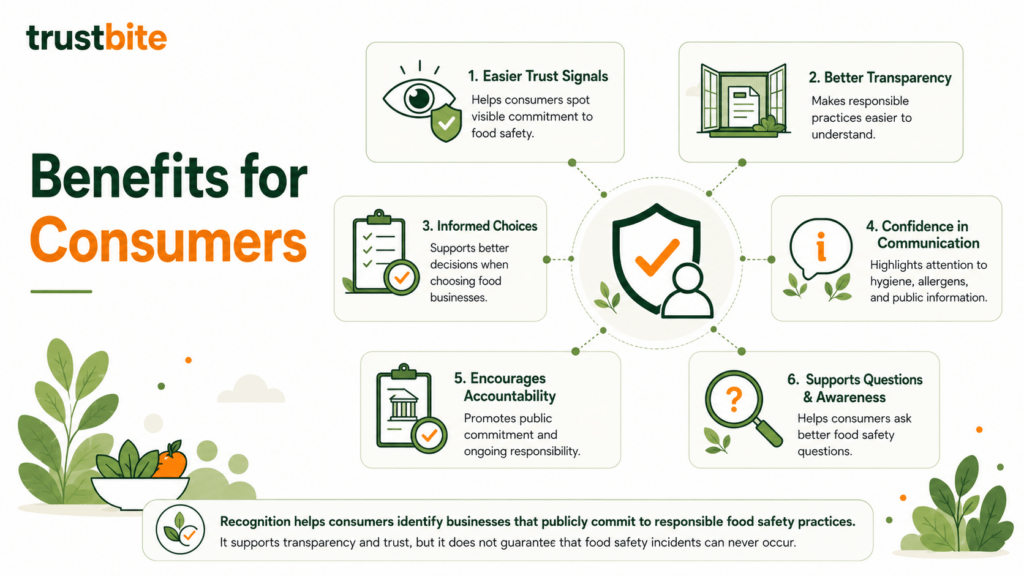
Benefits for Consumers
Consumers often want to make informed choices, but they usually have limited access to behind-the-scenes food safety information.
A food safety recognition program can help consumers identify businesses that publicly commit to responsible food safety practices, transparency, and ongoing improvement.
This can be especially relevant for consumers who care about:
- Hygiene standards
- Allergen communication
- Staff training
- Transparency
- Brand accountability
- Professional credibility
- Responsible management
- Food safety culture
Recognition does not mean that consumers should stop being cautious or that incidents cannot occur. It simply provides an additional trust signal.
A credible food safety recognition program can also make food safety easier to understand. Instead of expecting consumers to interpret technical audit schemes or legal requirements, recognition can communicate key responsibility indicators in a more accessible way.
This supports food safety transparency and helps consumers ask better questions about the businesses they trust.
Benefits for the Wider Food Safety Ecosystem
Food safety recognition programs can support not only businesses and consumers, but also the wider food safety ecosystem.
Regulators
Recognition programs do not replace regulators or official controls. However, they can encourage businesses to take responsibility beyond minimum compliance and strengthen public awareness of food safety expectations.
When designed carefully, recognition can support a culture where businesses are more proactive, better trained, and more transparent.
Certification bodies
Recognition should not compete with certification by pretending to be a formal audit scheme. Instead, it can help explain the value of food safety systems to a broader public.
A business with certification may use recognition to communicate its commitment in a more consumer-friendly way, while still maintaining formal certification for technical and supply chain requirements.
Consultants
Food safety consultants can benefit from recognition programs that encourage businesses to improve:
- Systems
- Documentation
- Training
- Internal communication
- Food safety culture
- Corrective action practices
Recognition may create demand for professional support without replacing the need for competent consulting or auditing.
Training providers
Training providers may be recognized for delivering responsible, relevant, and well-structured food safety education. This can support professional credibility and help businesses identify training partners.
Technology platforms
Digital tools can support:
- Food safety documentation
- Monitoring
- Alerts
- Traceability
- Training
- Reporting
- Corrective action tracking
Recognition programs may encourage the responsible use of technology as part of broader food safety management.
Businesses and supply chains
Recognition can encourage better communication between businesses, suppliers, service providers, and customers. It supports a food safety culture where responsibility is visible, not hidden in internal files.
Common Misunderstandings About Food Safety Recognition
Because food safety recognition is still an emerging area, misunderstandings are common. Clear communication is essential.
Misunderstanding 1: Recognition is the same as certification
Recognition is not the same as certification.
Food safety certification usually verifies conformity to a formal standard through a structured audit process. Recognition generally focuses on commitment, transparency, trust-building, education, culture, or responsible practices.
A business may have both certification and recognition, but they serve different purposes.
Suggested internal link: Certification vs Recognition: What’s the Difference?
Misunderstanding 2: Recognition replaces inspections
Recognition does not replace government inspection.
Food businesses must still comply with applicable food laws, official inspections, licensing requirements, hygiene rules, labeling rules, allergen rules, and other legal obligations.
A recognition program should never suggest that a recognized business is exempt from inspection or enforcement.
Misunderstanding 3: Recognition guarantees that a business will never have a food safety incident
No responsible food safety program should guarantee that incidents can never happen.
Food safety risk can be reduced through good systems, training, culture, monitoring, and corrective action, but risk cannot be eliminated completely.
Recognition should communicate commitment and responsible practices, not absolute safety.
Misunderstanding 4: Recognition is only a marketing label
Recognition can support marketing, but credible recognition should be more than a label.
A meaningful food safety recognition framework should include:
- Criteria
- Evidence
- Review
- Transparency
- Renewal
- Accountability
Without those elements, a trust mark may risk becoming a superficial claim.
Misunderstanding 5: Recognition is only for large companies
Recognition is not only for large companies.
Small restaurants, cafes, caterers, bakeries, food trucks, local manufacturers, and independent food professionals may also benefit from recognition if the criteria are appropriate to their size, risk level, and activities.
In fact, smaller businesses may benefit from recognition because they often need practical ways to communicate trust and professionalism to customers.
How TrustBite Fits Into Food Safety Recognition
TrustBite operates as an independent food safety recognition authority focused on strengthening public trust in food businesses through voluntary recognition, transparency, professional credibility, education, and responsible food safety practices.
The role of TrustBite is to support:
- Food safety transparency
- Responsible practices
- Professional recognition
- Public trust
- Clear communication
- Food safety culture
- Accountability
Through its recognition framework, TrustBite can help food businesses and food safety professionals communicate their commitment more clearly and responsibly.
TrustBite recognition may help stakeholders understand that a participant has engaged with defined trust-building criteria. However, it should always be communicated accurately. Recognition is not a guarantee of safety, not a license to operate, and not a substitute for formal food safety obligations.
Relevant internal resources may include:
- What Is TrustBite?
- The TrustBite Recognition Framework Explained
- How TrustBite Evaluates Food Businesses
- Why Transparency Matters in Food Safety
- Certification vs Recognition: What’s the Difference?
These resources can help businesses, professionals, and consumers understand how food safety recognition fits into the wider compliance and certification landscape.
Why Recognition Programs Are Becoming More Important
Food safety recognition programs are becoming more important because the expectations around food safety are changing.
Higher consumer expectations
Consumers increasingly expect businesses to be transparent, responsible, and proactive. They may not understand every technical aspect of food safety, but they want confidence that businesses are taking food safety seriously.
Online reviews and reputation risk
A business’s reputation can be affected quickly by:
- Online reviews
- Social media posts
- Photos
- Videos
- Complaints
- Public comments
- News coverage
Food safety concerns can spread faster than formal explanations.
Recognition programs can help businesses communicate responsibility before a crisis occurs.
Food safety incidents spreading quickly through media
Food safety incidents can become public quickly, especially when they involve:
- Allergens
- Outbreaks
- Contamination
- Vulnerable consumers
- Product recalls
- Poor hygiene claims
A strong food safety culture and transparent communication can help businesses build credibility, although recognition should never be used to downplay or excuse incidents.
Supply chain complexity
Modern food supply chains are complex. Ingredients, packaging, transport, storage, technology, and outsourced services may involve multiple partners.
Recognition programs can encourage more visible accountability across the food ecosystem, especially when they include:
- Consultants
- Trainers
- Technology providers
- Supply chain partners
- Food manufacturers
- Service providers
Demand for transparency
Food safety transparency is becoming a trust factor. Consumers and business partners increasingly want to know not only what a business sells, but how responsibly it operates.
Recognition can make responsible practices easier to communicate in a structured and understandable way.
Growth of trust marks and public registries
Trust marks and public registries are becoming common across many sectors, from sustainability to cybersecurity to professional competence.
In food safety, a food safety trust mark can help organize trust signals in a way that is easier for the public to verify, provided the program is honest about its scope and limitations.
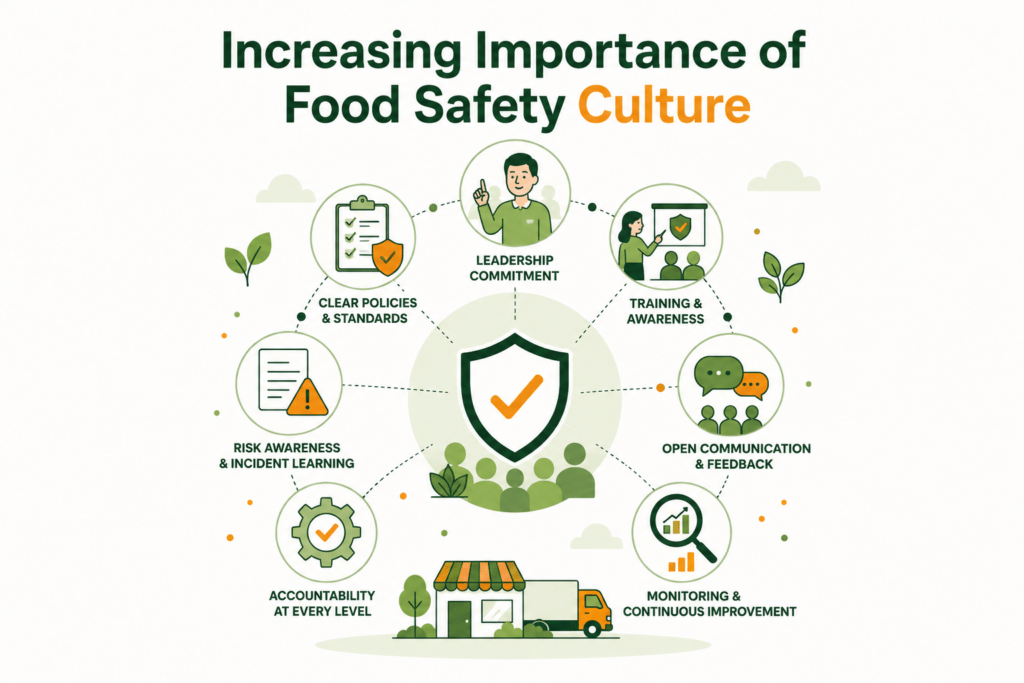
Increasing importance of food safety culture
Food safety culture is now widely recognized as a critical part of effective food safety management. Written procedures matter, but they must be supported by:
- Leadership
- Behavior
- Training
- Awareness
- Accountability
- Communication
- Continuous improvement
Recognition programs can help bring food safety culture into public communication without replacing technical audits or legal controls.
Key Takeaways
- A food safety recognition program is a voluntary framework for recognizing responsible food safety practices, transparency, education, culture, and trust-building.
- Food safety recognition is not the same as food safety certification.
- Recognition does not replace government inspection, legal compliance, HACCP, ISO 22000, BRCGS, FSSC 22000, or other certification schemes.
- Recognition can help food businesses communicate responsible practices more clearly to consumers and stakeholders.
- A credible food safety recognition framework should include defined criteria, evidence review, transparency, renewal, and accountability.
- Food safety recognition can support consumer trust in food businesses, but it does not guarantee that incidents will never occur.
- Recognition programs may apply to restaurants, cafes, manufacturers, caterers, consultants, training providers, technology platforms, and supply chain partners.
- TrustBite fits into this space as an independent food safety recognition authority that complements compliance and certification through transparency and trust-building.
FAQ: Food Safety Recognition Programs
What is a food safety recognition program?
A food safety recognition program is a voluntary framework that recognizes food businesses, professionals, training providers, or related organizations for meeting defined criteria connected to responsible food safety practices, transparency, education, culture, or trust-building.
It helps make food safety responsibility more visible to consumers and stakeholders, but it does not replace legal compliance, inspections, HACCP, or food safety certification.
Is food safety recognition the same as certification?
No. Food safety recognition is not the same as food safety certification.
Certification usually verifies conformity to a formal standard, such as ISO 22000, FSSC 22000, BRCGS, IFS, or SQF. Recognition typically focuses on public trust, transparency, commitment, culture, and responsible practices.
A business can use recognition to communicate its commitment, but it should not present recognition as certification unless it has actually been certified by an appropriate certification body.
Does recognition replace government inspection?
No. Recognition does not replace government inspection.
Food businesses must still comply with food safety laws and official requirements in their jurisdiction. Government inspections and official controls remain separate from voluntary recognition programs.
A food safety recognition program should be presented as complementary, not as a substitute for legal oversight.
Can recognition improve consumer trust?
Recognition can support consumer trust when it is based on clear criteria, responsible communication, transparency, and accountability.
Consumers often cannot see behind the scenes of a food business. A food safety recognition program can help communicate that a business is publicly committed to responsible practices and ongoing improvement.
However, recognition should not be used to claim that a business is risk-free or guaranteed safe.
Who can participate in a food safety recognition program?
Participation depends on the specific recognition framework. Programs may recognize:
- Restaurants
- Cafes
- Hotels
- Food manufacturers
- Catering companies
- Retailers
- Consultants
- Training providers
- Food safety professionals
- Technology platforms
- Supply chain partners
The criteria should be appropriate to the type of participant and clearly explain what is being recognized.
Conclusion
Food safety recognition programs represent an important bridge between compliance, certification, transparency, and public trust.
Legal compliance remains the foundation of food safety. Certification plays an important role in verifying conformity to formal standards. Regulatory inspections remain essential for public health protection and enforcement.
Food safety recognition serves a different purpose. It helps responsible food businesses, professionals, and organizations communicate their commitment to food safety culture, transparency, education, and public accountability in a way that is easier for consumers and stakeholders to understand.
A credible food safety recognition program does not guarantee food safety, replace inspections, or substitute for certification. Instead, it complements existing systems by making responsible practices more visible.
For modern food businesses, trust is no longer built only through internal procedures. It is also built through transparency, communication, culture, and accountability. Food safety recognition programs can help support that trust when they are designed and communicated responsibly.