Food safety training is one of the most important parts of running a food business. Most companies understand this. Restaurants train kitchen staff. Food manufacturers teach hygiene procedures. Hotels train teams on safe food handling. Delivery operations explain temperature control and contamination risks.
Yet many businesses still struggle with the same problems.
Employees forget procedures. Cleaning steps get skipped. Temperature checks are inconsistent. New workers copy bad habits from others. Managers assume training was understood when it was not.
This creates a serious gap between training and daily behavior.
The problem is usually not that businesses do not care about food safety. In many cases, they invest time and money into employee food safety training. The real issue is that the training system itself is often weak, inconsistent, or difficult for workers to follow in real life.
Food safety consistency does not come from a single training session. It comes from continuous education, practical guidance, easy access to procedures, and management support.
In this article, we will look at why food safety training fails in many businesses and what companies can do to improve long term results.
Poor Onboarding Creates Weak Foundations
Many food safety problems begin during onboarding.
New employees are often rushed into operations because businesses are short staffed or under pressure. A worker may receive a quick explanation of hygiene rules and then immediately start working.
This creates confusion from the first day.
In restaurants, a new food handler may not fully understand cross contamination risks. In food manufacturing, a worker may not know how to properly report damaged packaging or equipment problems. In delivery operations, drivers may not understand temperature control requirements during transport.
When onboarding is weak, employees create their own shortcuts.
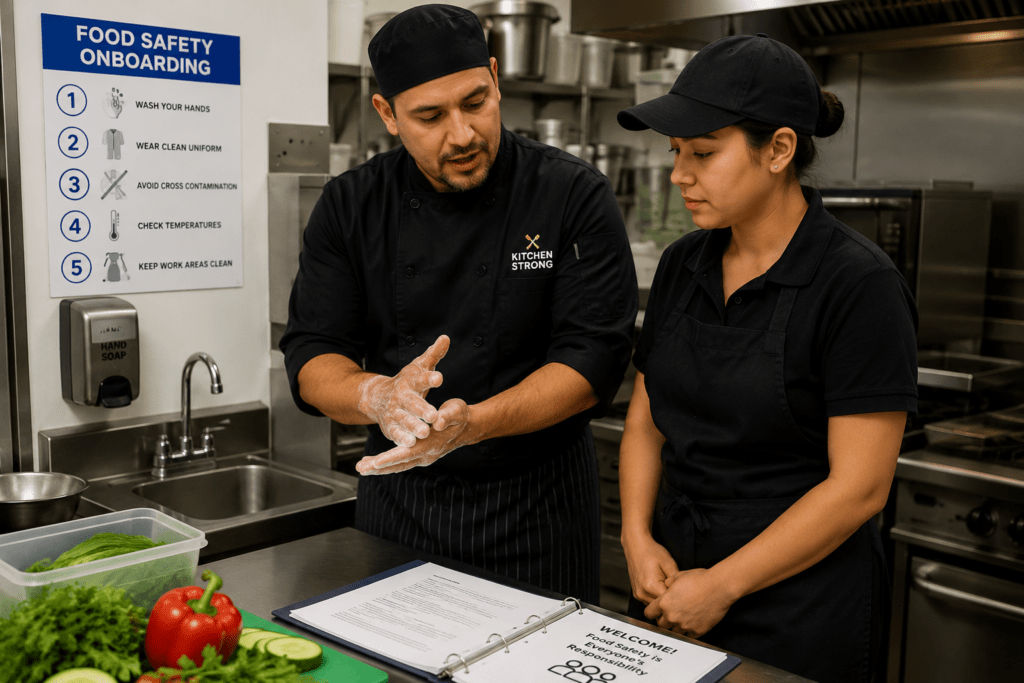
Good food handler training should start before employees handle food independently. Workers need time to understand procedures, ask questions, and practice tasks correctly.
Practical onboarding should include:
- Hand washing demonstrations
- Cleaning and sanitation procedures
- Safe storage practices
- Allergen awareness
- Personal hygiene expectations
- Reporting procedures for food safety incidents
Training must also match the employee’s actual role. Generic workforce training often leaves workers unsure about their daily responsibilities.
Language Barriers Often Go Ignored
Many food businesses employ multilingual teams. This is especially common in restaurants, hotels, catering operations, warehouses, and food factories. One of the biggest food safety mistakes companies make is assuming everyone fully understands the training language.
Workers may nod during training sessions even when they only understand part of the information. Some employees avoid asking questions because they feel embarrassed or worried about slowing down the operation. This creates hidden risks.
For example, an employee may misunderstand sanitizer mixing instructions or allergen separation rules. Another worker may not fully understand cleaning schedules or temperature recording procedures. Food safety education only works when employees truly understand the information.
This is why multilingual food hygiene training is becoming more important across the industry. Digital food safety training platforms now allow businesses to offer training in multiple languages, helping workers learn at their own pace and improving overall understanding.
Modern platforms like Confi Food are helping businesses solve this problem by offering multilingual food safety education that workers can access more easily during onboarding and daily operations. This improves understanding and helps reduce training inconsistencies across diverse teams.
Clear visuals, videos, simple wording, and translated procedures can significantly improve consistency.
High Employee Turnover Weakens Food Safety Culture
High turnover is common in hospitality and food service industries. Restaurants frequently hire temporary workers, seasonal staff, or inexperienced employees. Delivery operations often experience rapid workforce changes. Food manufacturing businesses may struggle with staffing shortages.
This creates a constant training cycle. When businesses are always training new people, consistency becomes difficult to maintain. Experienced workers leave, knowledge disappears, and managers focus more on filling shifts than improving food safety culture.
Over time, standards slowly drop.
New employees may learn more from coworkers than from official procedures. If bad habits already exist in the workplace, those habits spread quickly.
Strong food safety culture depends on operational consistency. That consistency becomes harder when training systems are not structured and repeatable.
Businesses with high turnover need training systems that are:
- Easy to repeat
- Simple to access
- Fast to understand
- Consistent across locations
- Supported by documented procedures
Without structure, every new employee starts from a different standard.
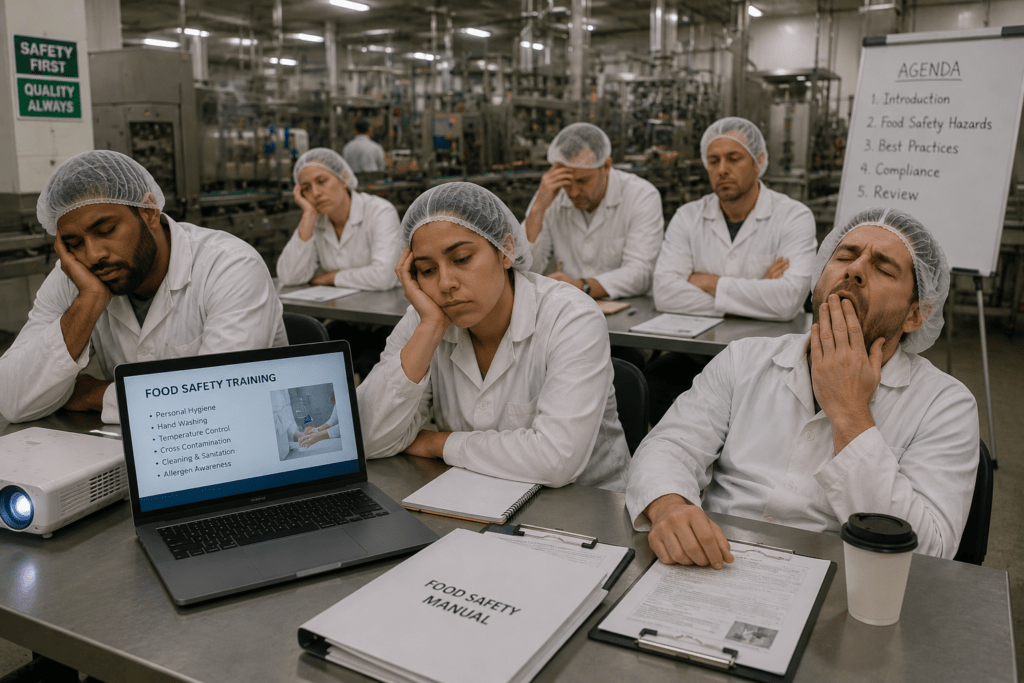
Training Fatigue Reduces Attention
Many businesses overload employees with information during training sessions.
Workers may sit through hours of videos, presentations, or paperwork in a single day. After a while, attention drops. Employees remember very little of what was covered.
This is known as training fatigue.
Food safety training should not feel like memorizing large amounts of information at once. Workers need simple and realistic education connected to their daily tasks.
For example, a restaurant worker benefits more from seeing proper glove changing procedures during real kitchen operations than from reading long policy documents.
People remember training better when it is:
- Short
- Practical
- Visual
- Repeated over time
- Connected to real work situations
Food safety compliance improves when training becomes part of operations instead of a separate administrative task.
Employees Naturally Forget Procedures
Even good training fades over time. This is normal human behavior. Workers forget details when procedures are not reinforced regularly. Employees may remember general concepts but forget important steps such as sanitizer contact times, allergen controls, or equipment cleaning sequences. In busy environments, people rely on habits.
If safe habits are not reinforced consistently, shortcuts replace procedures.
For example:
- A cook skips changing gloves during peak service
- A warehouse worker stops recording temperatures properly
- A cleaner rushes sanitation steps before closing
- A delivery driver leaves products outside refrigeration too long
These problems usually develop slowly. Managers often notice them only after audits, complaints, or incidents. This is why refresher training is critical.
Lack of Refresher Training Causes Standards to Decline
Many businesses provide food safety training once and assume the job is finished. In reality, training should be continuous. Procedures change. Equipment changes. Staff changes. Risks change.
Without refresher training, employees slowly drift away from standard procedures.
Short refresher sessions help workers stay aligned with operational expectations. They also give businesses a chance to correct mistakes before they become larger problems.
Refresher training can include:
- Monthly hygiene reminders
- Short HACCP training updates
- Practical demonstrations
- Team discussions about recent mistakes
- Quick digital quizzes
- Seasonal training for temporary staff
Continuous education helps maintain long term food safety culture.
Businesses that maintain the strongest consistency usually treat food safety education as part of daily operations instead of a once per year requirement. Structured digital systems like Confi Food make refresher training easier to organize across multiple teams and locations while keeping training records centralized and accessible.
Lack of Practical Demonstrations Creates Gaps
Food safety is highly practical work. Employees must physically perform tasks correctly, not just understand them theoretically. This is where many training programs fail. Workers may watch videos or sign documents without ever practicing procedures under supervision.
For example:
A worker may know that thermometers are important but not know how to calibrate one properly. A cleaner may understand sanitation rules but not know how much chemical solution to use. A food handler may understand allergen risks but still accidentally use contaminated utensils during service. Practical demonstrations improve understanding far more than passive learning alone.
Managers and supervisors should regularly observe employees performing key food safety tasks and provide immediate feedback when needed.
Poor Documentation Creates Compliance Problems
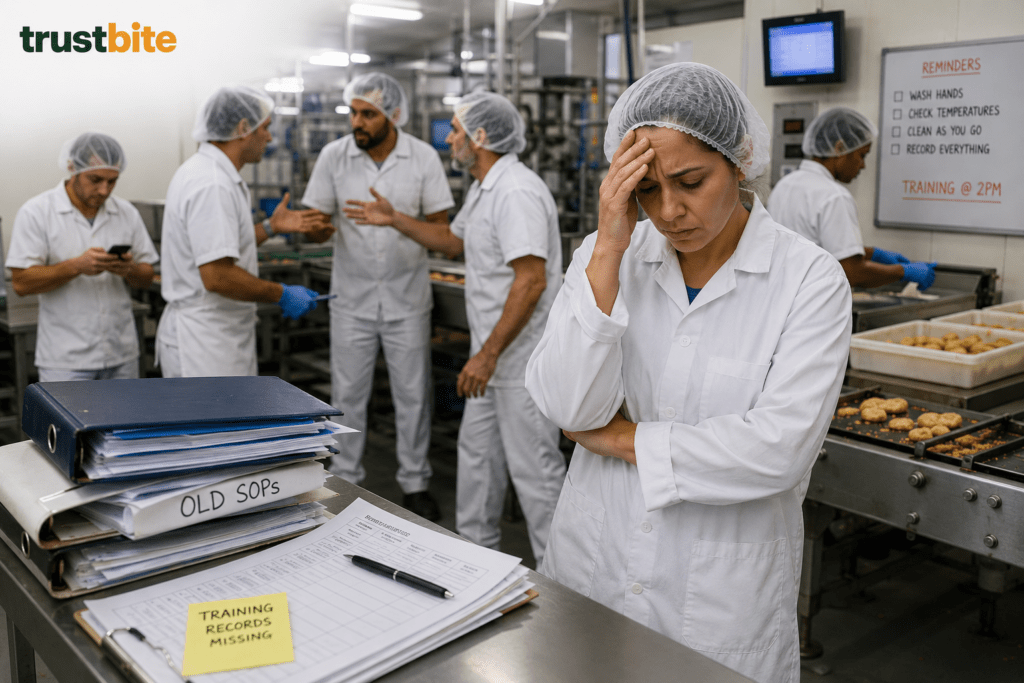
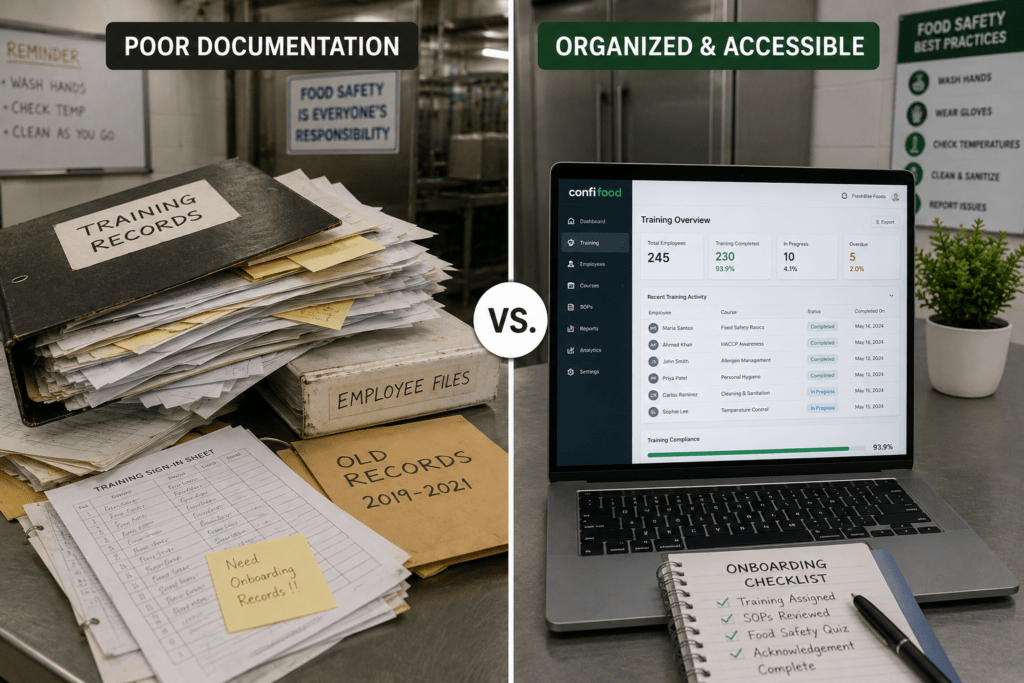
Food safety compliance depends heavily on documentation. Many businesses struggle because training records are incomplete, outdated, or difficult to manage. This creates problems during audits, inspections, and internal reviews.
Common documentation issues include:
- Missing employee training records
- Unclear HACCP training completion dates
- Inconsistent onboarding documentation
- Paper records getting lost
- No proof of refresher training
- Different procedures across locations
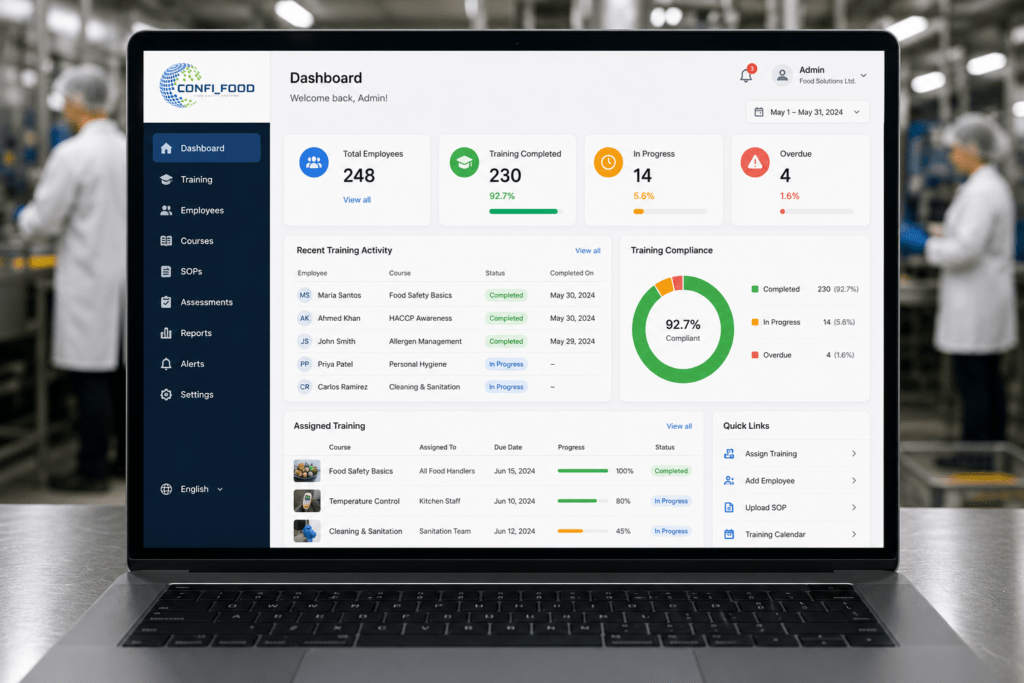
Poor documentation also makes it harder for managers to track training gaps. Digital workforce training systems are helping businesses improve organization by centralizing records, SOP access, and employee progress tracking.
Platforms like Confi Food also help businesses simplify documentation management by keeping training records, onboarding materials, refresher training progress, and workforce education in one centralized system. This improves visibility and reduces administrative confusion during audits and internal reviews.
Limited Management Involvement Sends the Wrong Message
Employees pay attention to what managers prioritize. If leadership ignores food safety procedures, workers often do the same. In some businesses, managers only focus on food safety during inspections or audits. Employees quickly notice this pattern.
Strong food safety culture requires visible management involvement.
Managers should:
- Follow hygiene rules themselves
- Participate in training sessions
- Correct unsafe behavior immediately
- Encourage questions
- Reinforce procedures daily
- Support employees during busy operations
When leadership stays involved, employees are more likely to take training seriously.
Inconsistent SOP Access Creates Confusion
Many employees cannot easily access standard operating procedures during work. Printed binders may be outdated or stored in offices that workers rarely visit. Some employees rely entirely on memory or verbal instructions from coworkers. This creates inconsistency.
For example, two shifts may follow different cleaning methods because procedures are not clearly accessible. Digital SOP systems are helping businesses solve this problem by allowing workers to quickly view procedures from phones, tablets, or workplace screens. Easy access improves consistency because employees can verify steps in real time instead of guessing.
This is especially useful in:
- Restaurants
- Food manufacturing facilities
- Catering operations
- Delivery hubs
- Multi location businesses
Centralized digital systems such as Confi Food also allow businesses to standardize SOP access across departments, making procedures easier to follow during real operations instead of only during audits or inspections.
How Training Problems Affect Different Food Businesses
Restaurants
Restaurant training problems often appear during busy service periods.
Workers rush tasks, skip hygiene steps, and rely on shortcuts when under pressure. New employees may struggle with cross contamination prevention, allergen controls, or cleaning consistency.
High turnover makes continuous restaurant training essential.
Food Manufacturers
Food manufacturing businesses face more complex operational risks.
Employees must follow strict hygiene procedures, equipment cleaning protocols, traceability systems, and HACCP training requirements.
When training gaps exist, contamination risks increase significantly.
Hospitality Businesses
Hotels, resorts, and catering businesses often manage large teams with varying experience levels.
Temporary workers and seasonal hiring increase the need for consistent workforce training and multilingual education systems.
Delivery Operations
Delivery businesses face growing food safety challenges related to temperature control and handling during transport.
Drivers and dispatch teams need clear food safety education to prevent time and temperature abuse.
How Digital Workforce Education Platforms Improve Food Safety Consistency
Modern food businesses are increasingly moving toward digital workforce education because traditional training methods often create inconsistency between locations, shifts, and employee groups.
Platforms such as Confi Food help businesses create a more structured and reliable food safety training system by centralizing education, SOP access, onboarding, and compliance documentation in one place.
This allows employees to receive the same training standards regardless of language, location, or experience level.
Digital food safety training platforms can help businesses:
- Deliver multilingual employee food safety training
- Simplify onboarding for new workers
- Provide instant access to SOPs and hygiene procedures
- Track HACCP training completion
- Organize training documentation
- Support refresher training across teams
- Improve consistency between shifts and departments
For restaurants, this can reduce confusion during busy service hours. For food manufacturers, it helps standardize operational procedures across production teams. In hospitality and delivery operations, it improves workforce alignment even when employee turnover is high.
One of the biggest advantages of systems like Confi Food is operational consistency. Employees are not forced to rely on memory, outdated binders, or verbal explanations from coworkers. Training materials, procedures, and food safety expectations remain clear and accessible throughout daily operations.
As businesses grow, digital workforce education also makes it easier to maintain food safety culture across multiple teams and locations without lowering standards.
Conclusion
Food safety training fails when businesses treat it as a one time event instead of an ongoing operational process.
Employees need clear onboarding, practical demonstrations, refresher training, easy procedure access, and active management support. Without these elements, even well designed training programs lose effectiveness over time.
Restaurants, food manufacturers, hospitality businesses, and delivery operations all face different challenges, but the core problem is usually the same.
Consistency.
Strong food safety culture is built through continuous education, daily reinforcement, and realistic systems that workers can actually follow during busy operations.
Businesses that invest in structured, accessible, and continuously reinforced training systems are more likely to improve compliance, reduce operational mistakes, and maintain stronger food safety performance over the long term. Modern workforce education platforms such as Confi Food are helping many businesses create the consistency needed to support long term food safety culture across growing teams and operations.
Frequently asked questions
Why does food safety training fail in many businesses?
Food safety training often fails because of poor onboarding, high employee turnover, lack of refresher training, language barriers, weak management involvement, and inconsistent SOP access.
How often should employees receive food safety training?
Employees should receive food safety training during onboarding and regular refresher training throughout the year to maintain consistency and reinforce safe practices.
What is the biggest problem with employee food safety training?
One major problem is that employees forget procedures over time when training is not reinforced through practical demonstrations and daily supervision.
Why is multilingual food safety training important?
Multilingual food safety training helps employees fully understand hygiene procedures, reducing misunderstandings and improving food safety compliance.
How can digital food safety training improve consistency?
Digital food safety training platforms help businesses standardize education, track employee progress, store documentation, and provide easier access to SOPs and refresher training.
What is Confi Food and how does it help with food safety training?
Confi Food is a digital workforce education and food safety management platform designed to help businesses improve training consistency, multilingual learning access, SOP accessibility, and compliance documentation. It helps restaurants, food manufacturers, hospitality businesses, and delivery operations standardize employee food safety training across teams and locations while making procedures easier to access during daily operations.